

A denial letter lands, you call the office, and someone tells you to “get a letter from your doctor.” Before you spend a week chasing one down, know this: the letter is optional, and the documents that actually move an appeal are ones you can pull yourself.
You can appeal a health insurance denial without a doctor’s letter. That surprises people, because the front-desk script so often points back to the physician. The numbers say the appeal is worth the effort anyway. Insurers on HealthCare.gov denied nearly 1 in 5 in-network claims in 2023, yet fewer than 1% of those denials were ever appealed, according to a KFF analysis of 425 million claims. When people did push back, insurers upheld their own decision only about 56% of the time, which means a large share of appealed denials got reversed.
Bottom Line First
- You can appeal without a doctor’s letter. A letter of medical necessity helps for some denials, but nothing in the federal appeal rules requires one to file.
- The documents that carry the most weight are ones you control: the denial notice or Explanation of Benefits with its reason code, your plan’s coverage document, an itemized bill, and your own medical records.
- You have 180 days from the denial to file the internal appeal. If that fails, you can request a free external review by an independent reviewer whose decision is binding on the insurer.
- Appeals succeed when you cite the exact plan language the denial contradicts, not when you write “I disagree with this decision.”
Table of Contents
No, a doctor’s letter is not required to appeal
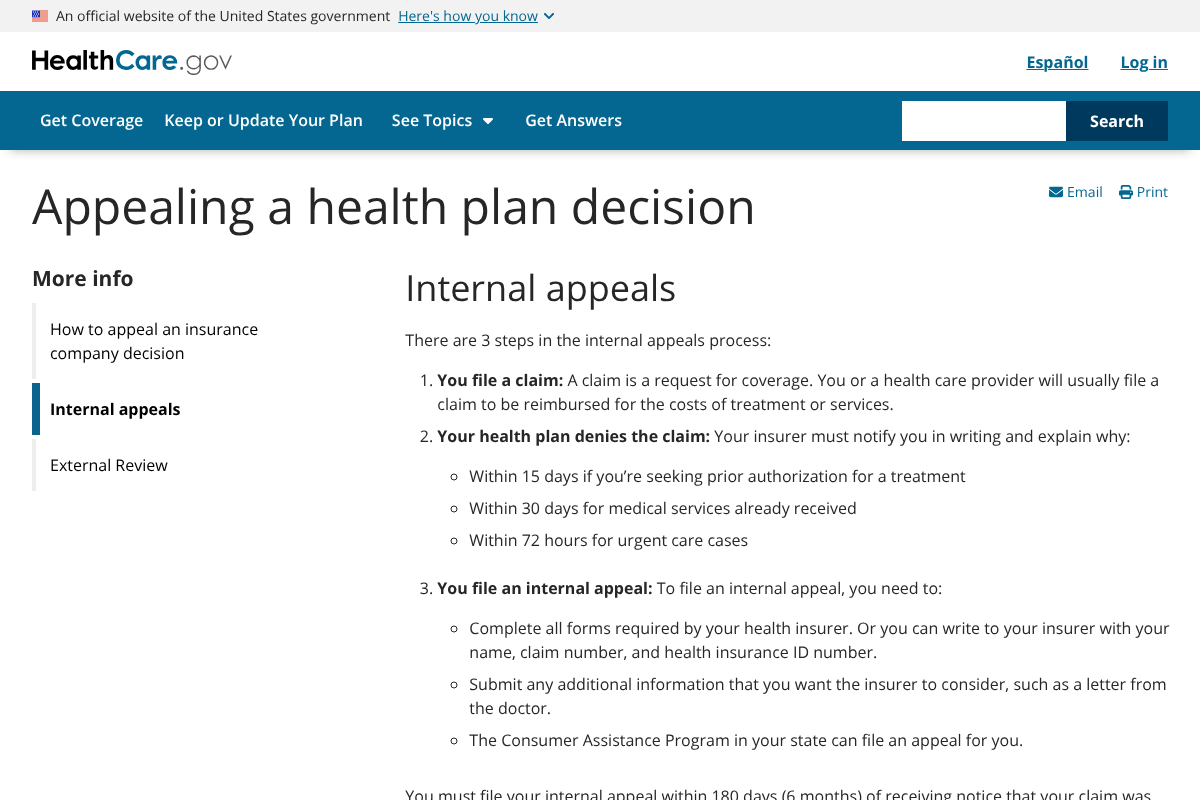
Federal rules let you submit any information you want the insurer to weigh, and a letter from your doctor is listed as one optional example, not a requirement. You can file the internal appeal yourself. HealthCare.gov spells out the internal appeals process directly, including that you can simply write to your insurer with your name, claim number, and member ID to start it.
The confusion usually starts at the clinic. Staff hear “denied as not medically necessary” and tell you the doctor has to appeal. The doctor’s office can appeal, and sometimes should, but that is a courtesy, not a gatekeeper. You have your own right to appeal, and filing yourself protects the deadline even if the office is slow. For a fuller map of why claims get rejected in the first place, our guide to the most common reasons health insurance claims get denied pairs well with this one.
The documents that actually strengthen an appeal
An appeal is won on paper you can gather without a single new note from a physician. Start with these, in roughly the order they matter.
- The denial notice or EOB. Find the denial reason code and the exact wording. “Not medically necessary,” “experimental,” “out of network,” and “no prior authorization” each call for a different rebuttal, so read it before you write anything.
- Your plan’s coverage document. The Summary of Benefits and Coverage, or the full policy, contains the clause that says the service is covered. Quoting that clause is the single most effective move most appeals skip.
- An itemized bill. Ask the provider for the itemized version with billing and procedure (CPT) codes, not the summary. A denial often traces to one miscoded line.
- Your own medical records. You can request your chart yourself under HIPAA. The existing notes frequently prove medical necessity on their own, with no new letter needed.
- The insurer’s own medical policy. Many plans publish the clinical criteria they use for a given treatment. If your records meet those published criteria, you are arguing with their own rulebook.

The deadlines that decide whether your appeal counts
Miss the window and the strongest argument in the world will not be read. The clock starts on the date of the denial notice.
| Stage | Deadline |
|---|---|
| File your internal appeal | Within 180 days (6 months) of the denial notice |
| Insurer decides, care not yet received | Within 30 days |
| Insurer decides, care already received | Within 60 days |
| Insurer decides, urgent case | As fast as your condition requires, at least within 4 business days |
| Request an external review | Within 4 months of the final internal denial |
| External reviewer’s decision | Binding; the insurer must comply by law |
The external review is the part most people never reach. It sends your case to an independent third party, it is free or nearly free, and the insurer has to honor the outcome. HealthCare.gov’s page on the external review process walks through how to request one, and for urgent situations you can run it at the same time as the internal appeal.
How to write the appeal letter yourself
One page is enough. A Reddit user in r/InsuranceClaims described reversing a $6,200 denial with a single-page letter, and the detail that did the work was citing the specific policy clause rather than a vague objection. Build yours in this order.
- Header the facts. Your name, member ID, claim number, date of service, and the date on the denial notice.
- Name the denial reason. Quote the reason code and wording straight from the EOB so there is no ambiguity about what you are contesting.
- Cite the coverage clause. Paste the exact language from your plan that covers the service. This is the step that turns “I disagree” into “your own policy says this is covered.”
- Attach the evidence. The itemized bill, the relevant pages of your medical records, and the insurer’s published medical policy if it supports you.
- Ask for a specific outcome. State that you want the denial overturned and the claim paid, and note that you will request an external review if it is upheld.
- Send it the required way. Use the plan’s portal, fax, or certified mail, and keep a dated copy of everything you send.
When a doctor’s letter still helps
For a flat “not medically necessary” call on a complex, newer, or high-cost treatment, a letter of medical necessity from your provider can be the deciding piece. Here is the practical order that protects you either way: file your own appeal now to lock the 180-day clock, then ask the office for the letter and add it to the record before the decision date. Most clinics have a template and can turn one around quickly once you have done the paperwork of framing the appeal. Waiting on the letter before you file is the mistake, because that is how people run out the deadline.
This article is general information, not medical, legal, or insurance advice. Appeal rights and timelines vary by plan and state, and self-funded employer plans, Medicare, and Medicaid follow different rules. For help with your specific denial, contact your plan or your state’s Consumer Assistance Program.
Main Takeaways
- A doctor’s letter is optional. You have your own right to appeal and to submit any supporting document.
- Lead with your plan’s coverage language and the EOB reason code; attach the itemized bill and your records.
- File within 180 days, and escalate to a binding external review within 4 months if the internal appeal fails.
- If you want a doctor’s letter, file first to protect the deadline, then add the letter to the record.
Frequently Asked Questions
Do I need a letter of medical necessity to appeal a denial?
No. Federal appeal rules let you submit any information you want the insurer to consider, and a doctor’s letter is one optional example, not a requirement. You can file the internal appeal yourself using the denial notice, your plan’s coverage language, and your own medical records. A letter can help for “not medically necessary” denials, but it is never the thing that lets you file.
What documents should I include in a health insurance appeal?
Start with the denial notice or Explanation of Benefits so you can quote the exact reason code. Add your plan’s Summary of Benefits and Coverage to cite the clause that covers the service, an itemized bill with procedure codes, and the relevant pages of your medical records. If the insurer publishes a medical policy for the treatment, include it when your records meet its criteria.
How long do I have to appeal a denied claim?
You generally have 180 days (about six months) from the date of the denial notice to file an internal appeal. If the internal appeal is denied, you have up to four months from that final decision to request an external review. Do not wait for a doctor’s letter to file, since a missed deadline can end the appeal regardless of how strong your case is.
Can I appeal if the insurer says it is “not medically necessary”?
Yes, and this is one of the most winnable denials. Compare your medical records against the insurer’s own published criteria for the treatment, and point out where you meet them. For complex cases a provider letter helps, but you can still file the appeal yourself and request an independent external review if the insurer upholds the denial.
What is an external review, and is it free?
An external review sends your denial to an independent third party after your internal appeal fails. It is free or very low cost, and the reviewer’s decision is binding, so the insurer must comply by law. You request it in writing within four months of the final internal denial, and in urgent cases you can ask for it at the same time as the internal appeal.
Does appealing myself hurt my chances compared with letting the doctor do it?
No. Your appeal carries the same rights as one filed by a provider, and you often have faster access to the documents that matter, like your EOB and plan policy. The doctor’s office can add clinical detail, but filing yourself protects the deadline and keeps the process in your control.
Practical Takeaway
Pull the denial notice, read the reason code, and find the clause in your plan that covers the service. Write a one-page appeal that quotes both, attach your itemized bill and records, and send it well inside the 180-day window. If the insurer still says no, request the free external review and let an independent reviewer decide. The doctor’s letter is a helper you can add along the way, not the ticket you need to start. For more practical coverage and consumer-health guidance, browse Wayodd’s Health section.