

New reporting describes a quiet shift in how some traffic stops begin: not with an officer noticing a broken taillight, but with a financial pattern flagged in a database.
A recent investigation says a secretive unit inside the Department of Homeland Security has been reviewing Americans’ financial activity and using it to flag drivers for traffic stops. If the reporting holds, the DHS program that analyzes finances to trigger traffic stops raises a question most people never think about on their commute: can a bank record, rather than an actual driving offense, be the real reason you get pulled over?
The details are still coming into focus, and some of it is disputed. But the outline is clear enough to explain plainly, without the shouting.
Short Answer
- Reporting describes units called Predictive Intelligence Targeting Teams, or PITT, operating within U.S. Border Patrol, part of Customs and Border Protection under DHS.
- Agents reportedly review law-enforcement databases, including financial activity, to build leads, then pass names to local police who can act on them during a traffic stop.
- Civil liberties experts say the practice may sidestep the usual requirement for probable cause, and the agency has declined to say what data it uses or whether it seeks warrants.
Table of Contents
What the PITT Program Reportedly Does
According to the investigation that broke the story, Border Patrol runs small intelligence teams that comb through sensitive law-enforcement databases to spot patterns worth investigating. The reporting says those patterns include financial behavior: how money moves, where it goes, and what that might suggest about smuggling or other cross-border crime.
At least two of these teams have been identified so far, one in the Spokane Sector in Washington near the Canadian border, and one in the Laredo Sector in Texas near the Mexican border. Their location matters. Border Patrol has broad authority in the zone near a border, which is part of why the program has drawn scrutiny rather than a shrug.
The teams themselves do not typically make the stop. They develop a lead and hand it off. That handoff is where the whole thing gets legally interesting.
How a Financial Flag Becomes a Traffic Stop
This is the part worth slowing down on, because the mechanics are the story. A federal team flags a person based on data. The name goes to local or state police. An officer then finds an ordinary reason to pull the driver over, a lane change without a signal, a few miles over the limit, a light that is out, and conducts the stop as if it started there.

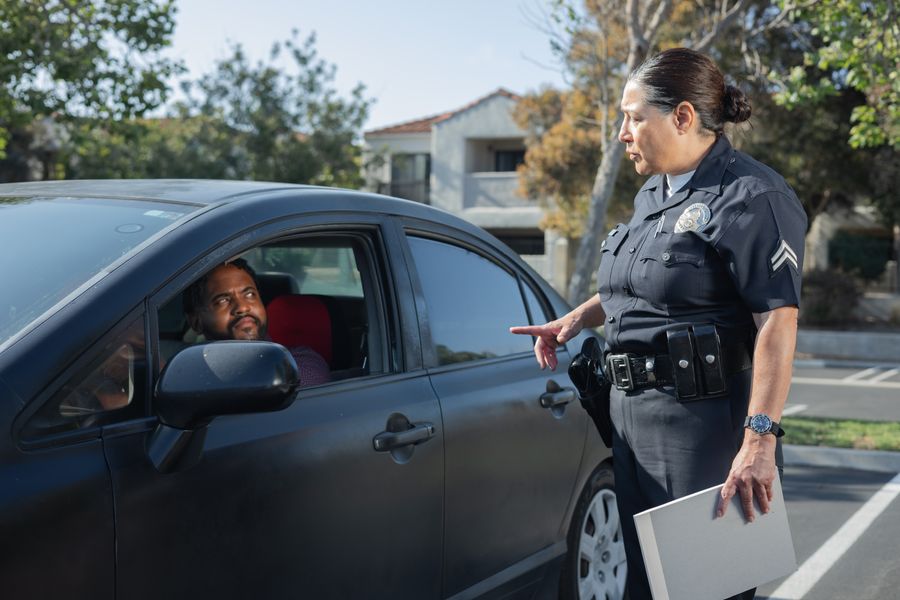
Critics have a name for that maneuver: parallel construction. It means building a second, presentable explanation for a stop while keeping the real trigger out of the record. One expert quoted in the coverage put the objection simply, arguing that genuine probable cause cannot be manufactured after the fact. If a stop is justified in the paperwork by a minor traffic violation but actually driven by a financial flag, a driver may never learn why they were really singled out.
Actually, one thing is worth pinning down before going further. Being flagged is not the same as being charged. Much of what is described here sits in the murky space before any formal accusation, which is exactly what makes it hard to challenge.
Why Privacy and Legal Experts Are Alarmed
The Fourth Amendment protects against unreasonable searches and generally requires a good reason before the government digs into your private life. Financial records have long occupied a strange middle ground in that framework, and predictive systems push on that seam hard.
Three concerns come up repeatedly in the reporting and the reaction to it:
- Sourcing. It is not fully clear where all the financial data comes from, how much is obtained with a warrant, and how much flows through databases or brokers that skip that step.
- Due process. If the stated reason for a stop is not the real one, a driver cannot meaningfully contest the actual basis, which weakens a core protection.
- Scope creep. A tool built for cross-border crime can, over time, get pointed at ordinary people who were never suspected of anything specific.
Customs and Border Protection, for its part, declined to specify what financial activity it monitors or whether it obtains warrants, according to the reporting. That silence is a big reason the story has legs.
What This Means for Everyday Drivers
For the vast majority of people, a routine traffic stop is still a routine traffic stop. There is no reason to treat every red light as a surveillance event. Still, the reporting is a useful prompt to understand the ground rules you already operate under.
- You generally have to provide license, registration, and proof of insurance when asked during a lawful stop.
- You can ask, calmly, whether you are free to go. If the answer is yes, you may leave.
- In most situations you are not required to consent to a vehicle search, and you can decline consent without being disruptive.
- You can note what happened afterward, the time, the location, the stated reason, and keep that record if something feels off.
None of that changes how a stop is initiated behind the scenes. What it does is keep you clear-headed in the moment, which is the only part of this you actually control.
This article is general information, not legal advice. Your rights during a stop vary by state and situation, and the facts here come from ongoing reporting. Consult a qualified attorney for advice about a specific case or interaction.
What To Know
- The reporting centers on DHS Border Patrol teams, called PITT, that reportedly use financial data to generate leads.
- The controversial step is parallel construction: a real trigger hidden behind a routine traffic reason.
- Key facts, including data sources and warrant use, remain unconfirmed because the agency has not detailed them.
- Knowing your basic rights at a stop is the practical takeaway, not panic.
Frequently Asked Questions
Is DHS really using financial data to decide who gets pulled over?
According to recent investigative reporting, Border Patrol teams review financial activity among other data to flag people, then pass leads to local police who may act during a traffic stop. Some specifics remain unconfirmed, and the agency has not fully detailed the practice.
What is a PITT unit?
PITT stands for Predictive Intelligence Targeting Team. These are small intelligence groups within U.S. Border Patrol, part of Customs and Border Protection under DHS. At least two have been identified, in Washington’s Spokane Sector and Texas’s Laredo Sector.
What is parallel construction?
Parallel construction is building an alternate, presentable reason for a police action while keeping the original trigger out of the record. In this context, it would mean citing a minor traffic violation as the reason for a stop that was actually prompted by a financial flag.
Is this legal?
That is exactly what is in dispute. Critics argue it can undercut Fourth Amendment protections and the requirement for genuine probable cause. Whether specific practices are lawful will likely depend on how data is obtained and how stops are documented, and may end up tested in court.
What should I do if I am pulled over?
Provide the documents you are legally required to show, stay calm, and you can ask whether you are free to leave. You generally do not have to consent to a search. Afterward, write down the details. For a specific legal concern, talk to an attorney.
The Bottom Line
The uncomfortable idea at the center of this story is that a decision about your day, getting stopped on the road, could trace back to a spreadsheet you never saw. Whether the practice survives legal and public scrutiny is an open question, and the missing answers from the agency are the part to watch next. For related coverage, browse Wayodd’s Law and Finance sections. For now, the sensible response is not fear but attention: know how a stop is supposed to work, and keep track of when it does not.