
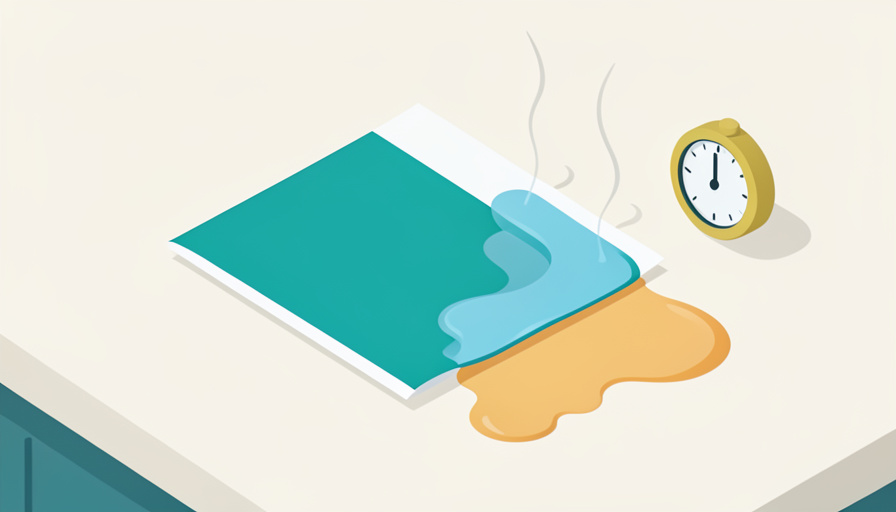
A quick swipe, a fresh smell, a surface that looks clean in seconds. It feels done. The trouble is that the germ-killing part was supposed to take minutes, and the counter dried before it started.
The disinfecting wipes dry out effectiveness question matters more than the label lets on, because a wipe only disinfects while the surface stays wet. Every disinfectant has a contact time, the minutes it must sit wet to kill what it claims to, and a surface that dries in thirty seconds never gets there. This explains how contact time really works, why wipes dry too fast, and how to use them so they actually disinfect rather than just tidy.
The Short Answer
- A disinfecting wipe only works while the surface stays visibly wet for the contact time on its label, often several minutes.
- If the surface dries before that time, the disinfectant may not reach its stated kill claim, so you have cleaned but not fully disinfected.
- Keep the surface wet for the full time, using more wipes if needed, and toss a pack that has dried out.
Table of Contents
Wipes Work Only While the Surface Stays Wet
A disinfecting wipe is not a magic cloth; it is a delivery system for a liquid disinfectant, and that liquid needs time on the surface to do its job. The label calls this the contact time, dwell time, or kill time, and it is the number of minutes the surface must stay wet to achieve the claim on the front. Common household wipes ask for anywhere from about one minute to four minutes, and the maximum any product uses is ten.
Here is the catch that trips everyone up. If the surface dries before that contact time is reached, the product may not have killed what it promised. You have wiped away visible dirt, which is real cleaning, but the disinfection step did not finish. The fix, backed by the EPA’s guidance on using disinfectants, is to keep applying until the surface stays wet for the whole time.
Why a Wipe Can Dry Too Fast
A few things speed up drying. A single wipe stretched across a big counter leaves only a thin film that evaporates in seconds. Warm rooms, sunny windowsills, and porous or textured surfaces all pull moisture away faster. And a pack that has been left open, or one whose formula simply holds less liquid, hands you a wipe that is already half dry before it touches anything. In each case the surface never stays wet long enough.
How to Make Wipes Actually Disinfect
Using wipes properly takes a minute longer and makes the difference between clean-looking and actually disinfected.
- Read the contact time on the label, since one minute and four minutes are very different jobs.
- Pre-clean first. Wipe off visible dirt with one wipe, then use a fresh one to disinfect, because grime blocks the disinfectant.
- Keep the surface visibly wet for the full contact time, going over it again with more wipes if it starts to dry.
- Work in small sections rather than one thin swipe across a whole counter, so each area stays wet.
- Reseal the pack tightly every time, and store it flat, to stop the wipes drying out between uses.
This article is general information, not medical or safety advice. Disinfectant products differ, so always follow the specific directions and contact time on your product’s label, keep products away from children and pets, and consult public health guidance or a professional for situations involving illness or vulnerable people.
The Takeaways
- Disinfecting works only while the surface stays wet for the label’s contact time, often several minutes.
- If a wipe dries the surface too fast, you have cleaned it but may not have fully disinfected it.
- Pre-clean, then keep the area visibly wet for the whole time, using extra wipes as needed.
- Reseal packs to prevent drying, and replace a tub of wipes that has already dried out.
Frequently Asked Questions
Do disinfecting wipes still work if they dry out?
A dried wipe, or one that dries the surface almost instantly, cannot disinfect properly, because the surface has to stay wet for the label’s contact time. It will still remove some visible dirt, which is cleaning, but the germ-killing claim depends on that wet time. Reapply so the surface stays wet for the full duration.
How long does a surface need to stay wet to disinfect?
It depends on the product, but common wipes require the surface to remain visibly wet for roughly one to four minutes, and no product uses more than ten. The exact time is printed on the label as the contact or dwell time. If the surface dries sooner, the disinfection is not guaranteed.
Can I add water to dried-out disinfecting wipes?
It is not a reliable fix. Adding water can dilute the disinfectant below the strength it needs to work, so the wipes may no longer meet their kill claim. If a pack has dried out, it is safer to replace it than to rehydrate it and trust it for disinfecting.
Should I wipe the surface dry afterward or let it air dry?
Let it air dry for the contact time rather than wiping it dry right away, since drying it early cuts the disinfectant’s working time short. Some labels advise a rinse afterward on surfaces that touch food. Follow the specific product’s directions, which will say whether to rinse and when.
Are wipes or sprays better for disinfecting?
Both can work if you respect the contact time. Sprays often make it easier to keep a surface wet for the full duration, while wipes are convenient but dry faster on large or warm areas. Whichever you use, the deciding factor is the same: keep the surface wet for the time the label requires.
Keep It Wet, or It’s Just a Wipe
Disinfecting wipes are genuinely useful, but only if you treat the wet time as the point rather than an afterthought. Check the contact time, pre-clean, and keep the surface visibly wet for the full minutes the label asks for, adding wipes if it dries. Do that and you get real disinfection; skip it and you have a nice-smelling counter that only looks clean. For more on cleaning that actually works, browse Wayodd’s Cleaning section.