
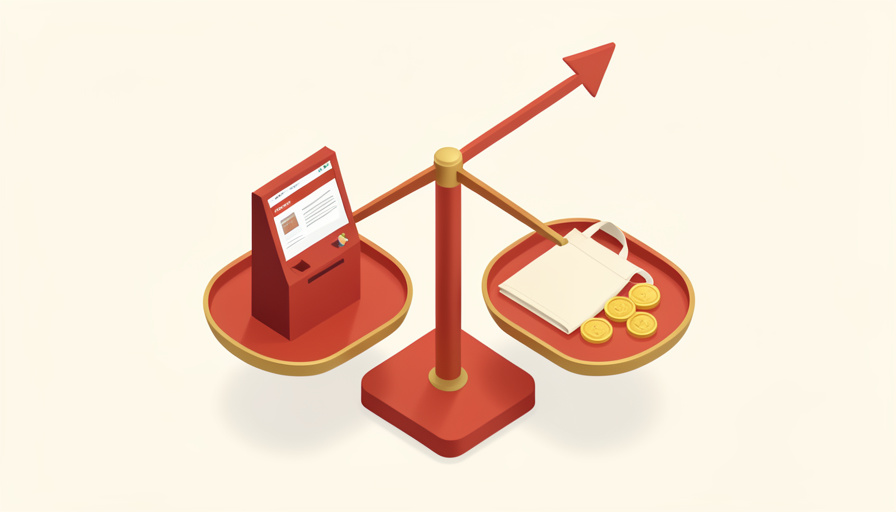
Everyone thought kiosks were a story about firing cashiers. The numbers say they were really a story about selling more, which changes the whole calculation.
When fast food brings back counter staff, it looks like automation losing. Read the economics and it looks more like automation being understood correctly for the first time. The kiosk was pitched as a labor cut, and that part underdelivered. What it actually delivered was a fatter average check, because a screen never forgets to ask if you want fries with that. Once you see the machine as a revenue tool rather than a headcount tool, the decision to keep humans at the counter stops looking like a retreat and starts looking like arithmetic.
Bottom Line First
- Kiosks reliably raise the average order value through steady upselling, which is the payoff that actually shows up on the books.
- The promised labor savings were smaller and slower than expected, because staff are still needed to help customers and run the floor.
- Because kiosks lift revenue, chains can afford to keep human staff for experience, so the reset is about the profitable mix, not undoing automation.
Table of Contents
The Payoff Was Revenue, Not Labor
Start with the number that actually moved. By industry estimates, orders placed at a kiosk run meaningfully higher than orders taken at a counter, often in the range of 15% to 30% more, with McDonald’s frequently cited as seeing roughly a dollar or two of extra spend per transaction. The mechanism is dull and effective: a kiosk suggests the upsize, the extra topping, the drink, every single time, without the social friction of a human asking.
That is the win the industry banked, even as the other promise wobbled. Chains sold boards and shareholders on kiosks as a way to shrink the wage bill. In practice, as trade coverage has noted, kiosks do not save labor costs, at least not quickly, because someone still has to help confused customers, fix jams, and run the dining room. The screen made more money by selling more, not by needing fewer people.
Why That Changes the Staffing Math
Here is the part that reframes the whole rebalancing story. If a kiosk mainly cut labor, adding a worker back would eat directly into the savings and look like a mistake. But if a kiosk mainly lifts the average check, then a well-placed employee who keeps the line moving and the experience pleasant helps protect that higher revenue. The human is no longer a cost the machine was meant to erase. They are a complement to the thing the machine is good at.
This is why the returning role is a hybrid. One worker now tends to cover what two once did, acting as cashier, kiosk guide, and floor host at once, while other staff shift toward food prep and service. The labor did not vanish. It moved, and against the backdrop of an ongoing quick-service labor crunch, the chains getting this right are staffing for revenue protection rather than pure order-taking.

The Limit of Over-Optimizing
There is a ceiling on squeezing a transaction, and chains are bumping into it. The same kiosk that upsells so well also started asking for tips, and customers noticed. When a Shake Shack order appeared to change price around a tipping prompt, the clip went viral, with customers claiming the total rose after they declined to tip and the company disputing that reading of it. Whatever the mechanics, the reaction was the tell.
Actually, that backlash is the real signal underneath the staffing news. Push a revenue lever too hard and you spend down customer goodwill, which is expensive to rebuild. Bringing a friendly face back to the counter is partly a hedge against exactly that, a way to keep the higher-spend machine from feeling cold or grabby. The math only works if people keep coming back.
| What kiosks were sold as | What the economics actually show |
|---|---|
| A labor cost cut | Modest, slow savings, since staff are still needed |
| A neutral convenience | A steady 15% to 30% lift in average order value |
| A full replacement for staff | A revenue tool best paired with a human host |
| A pure customer win | Upsells and tip prompts that can erode goodwill |
This article is general information about industry trends, not business or financial advice. Company strategies, margins, and store models vary widely, so treat these as broad patterns rather than guidance for a specific decision.
What Matters Most
- The kiosk’s proven return is higher revenue per order, not the labor savings originally promised.
- Because the machine lifts the check, keeping staff protects that revenue instead of eating it.
- The counter role has shifted to a hybrid host, with other labor moving to prep and service.
- Aggressive upsell and tip prompts have a goodwill cost that human service helps offset.
Frequently Asked Questions
Do self-order kiosks actually increase sales?
By industry estimates, yes. Kiosk orders tend to run roughly 15% to 30% higher than counter orders, and McDonald’s is often cited as seeing about a dollar or two more per transaction. The gain comes from consistent upselling that a kiosk performs on every order without hesitation.
Do kiosks really cut labor costs?
Less than expected, at least in the short term. Trade reporting has found that kiosks do not deliver quick labor savings because staff are still needed to assist customers, handle exceptions, and run the floor. The bigger financial benefit is revenue, not headcount reduction.
Why are chains adding counter staff back if kiosks make money?
Because the money comes from a higher average check, and a good employee helps protect that by keeping lines moving and the experience pleasant. When the payoff is revenue rather than a labor cut, staffing for experience supports profits instead of undercutting them.
What is the deal with kiosk tipping backlash?
Kiosks began adding tip prompts to self-service orders, which many customers found odd for a transaction they completed themselves. A viral Shake Shack case, in which customers claimed the price shifted around a tipping prompt and the company disputed that account, captured the broader frustration.
Is the fast-food industry abandoning kiosks?
No. Kiosk adoption is still growing, and the market is projected to keep expanding. What is changing is how chains use them, pairing the revenue-lifting machines with human staff rather than treating screens as a full replacement for people.
Final Word
The clean version of this story, machines beat humans, was never quite right. The messier and more useful version is that kiosks turned out to be great at selling and mediocre at replacing, so the smart play is to run both. For the consumer side of this shift, see our piece on why chains are adding cashiers back, and browse Wayodd’s Business & Markets and Business & Finance sections. Follow the revenue, not the headline, and the counter-staff comeback stops being a mystery.