
The photo shows a sleek shelf floating on a wall with a stack of books and a plant, no bracket in sight. The listing lists a weight capacity in bold, mentions “easy installation,” and includes a little bag of anchors. What it does not say, anywhere, is that the number only holds if you hit a stud. So you mount it into drywall, load it up, and wait.
The floating shelves stud requirement safety question matters because a shelf’s real capacity is decided at the wall, not on the box. The same shelf that safely holds forty pounds bolted to a stud might rip out of bare drywall under a fraction of that, taking a chunk of wall with it. A listing that never mentions studs is not automatically dangerous, but it is a red flag worth understanding. Here is why the anchoring decides everything, the real numbers, and what to check before you buy or mount one.
Quick Take
- A floating shelf’s safe weight depends on how it is anchored; studs hold vastly more than drywall alone.
- A listing that omits stud requirements often ships only light-duty anchors, which can give a false sense of capacity.
- For anything but light decor, anchor into studs or use proper heavy-duty hardware, and never trust drywall by itself.
A shelf that fails can injure someone or damage your wall. Treat weight ratings as best-case figures that assume correct installation, and when a load or a wall type is uncertain, err toward stronger anchoring or a lighter load.
Table of Contents
Why the Anchor, Not the Shelf, Decides Safety
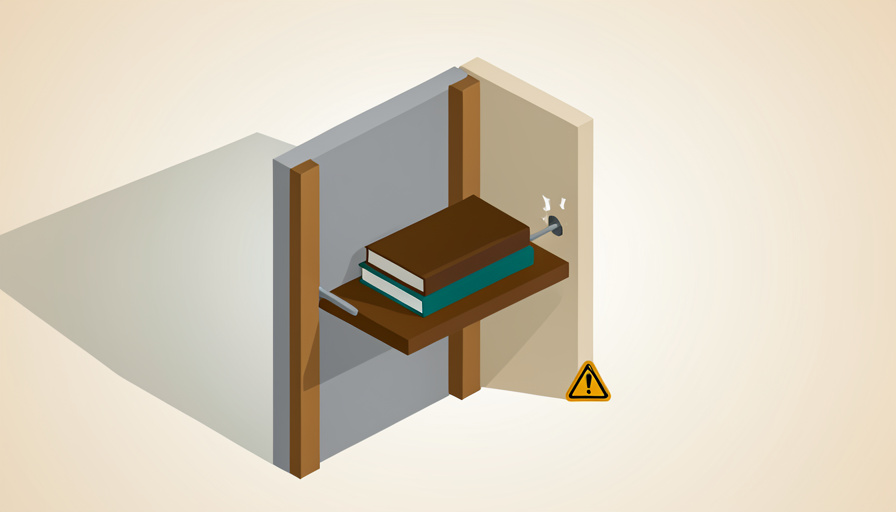
A floating shelf hides its support: metal rods on a bracket slide into the shelf, and the bracket screws to the wall. Two forces act on it, the downward weight pulling straight down, and a pull-out force as that weight levers the bracket away from the wall. Studs, the vertical wood framing behind the drywall, resist both because a screw bites into solid wood. Drywall is a soft gypsum panel; a screw or plastic anchor in drywall alone has little to grip, so under sustained or heavy load it tears out. The shelf is only ever as strong as what its screws are biting into.
The Real Numbers
The gap between anchoring methods is large. Fastened into a stud, a floating shelf commonly holds around forty-five to fifty pounds per stud, and heavy-duty rods into studs can reach much higher. A quality toggle bolt in hollow drywall might hold roughly twenty-five to fifty pounds each, though the drywall itself can still fatigue over time. A standard plastic drywall anchor, the kind often bundled in the box, holds only about ten to twenty-five pounds and suits light decorative items at most. When a listing advertises a big number, ask which of these it assumes.
Why a Listing Without Stud Requirements Is a Red Flag
Silence about studs usually means one of two things, and neither is reassuring. Either the seller is quoting a stud-mounted capacity while shipping only plastic anchors, so a buyer who follows the included hardware never reaches the advertised strength, or the product is genuinely meant for light loads and the marketing hides that. A trustworthy listing states the load rating and the condition for it, such as “when mounted into studs,” and specifies the wall types it supports. Missing that, assume the safe load is far lower than the headline and plan to supply your own hardware.
The Pre-Buy Checklist
Before adding a floating shelf to the cart, look for these:
- A stated load rating with its condition. A number that names the anchoring, like into studs, is far more trustworthy than a bare figure.
- The wall types it supports. Good listings distinguish stud, drywall, masonry, and tile, since each needs different hardware.
- What hardware is included. Plastic anchors only is a sign the shelf is rated for light use, whatever the headline says.
- Bracket and rod material. Steel rods resist bending; flimsy hardware sags even into a stud.
- Real photo reviews. Buyers who post the shelf loaded, or a failure, reveal more than the product shots.
How to Mount One Safely
Start by finding the studs with a stud finder and marking them, then aim to anchor the bracket into at least one, ideally two, for anything beyond token weight. Use the right fastener: lag screws or the included hardware driven into studs, and for spots between studs, quality toggle bolts rated above your intended load, never bare plastic anchors for weight. As Bob Vila’s floating shelf installation guide notes, hitting solid framing is the difference-maker. Keep heavy items toward the wall rather than the front edge, since weight out front multiplies the pull-out force, and choose anchors with room to spare, as tested roundups like Bob Vila’s best drywall anchors make clear.
Frequently Asked Questions
Do floating shelves always need to hit a stud?
Not for light decorative use, but for real weight, yes. A shelf holding books, dishes, or heavy decor should anchor into at least one stud, because drywall alone cannot reliably bear that load or the leverage it creates. For very light items, quality toggle bolts can work between studs, though they are a step down in reliability. The heavier the intended load, the more you should insist on solid framing behind at least part of the bracket.
How much weight can a floating shelf hold on drywall alone?
Far less than most people assume. With only standard plastic drywall anchors, plan on roughly ten to twenty-five pounds total, suitable for a few light objects, not a row of books. Good toggle bolts raise that, but the drywall can still fatigue under constant weight. There is no safe way to make bare drywall hold what a stud-mounted shelf holds, so match the load to the anchoring rather than hoping the wall cooperates.
What if there is no stud where I want the shelf?
You have options, in order of strength. The best is to reposition the shelf so at least one bracket point lands on a stud. If you cannot, use heavy-duty toggle bolts rated well above your planned load and keep the load light and close to the wall. For serious weight with no stud, some people add a mounting board screwed into multiple studs, then attach the shelf to that. What you should not do is load a shelf held only by plastic anchors.
Why do floating shelves fall even when installed?
Usually because the anchoring did not match the load, or the weight sat too far out on the shelf. Plastic anchors in drywall pull out under sustained weight, brackets flex if the rods are thin, and a heavy object near the front edge creates leverage that yanks the top of the bracket off the wall. Overloading past the rating, or assuming a bare-drywall install equals a stud install, is behind most of these failures. Correct hardware and honest loads prevent them.
Anchor It Right, Then Load It
A floating shelf is not inherently unsafe, but its safety lives entirely in the wall behind it, and a listing that stays quiet about studs is quietly lowering the number you can trust. Read the load rating and its condition, check what hardware comes in the box, and anchor anything with real weight into studs or heavy-duty fasteners rather than bare drywall. Keep the heavy things near the wall, and treat the advertised capacity as a ceiling, not a promise. Do that, and the shelf floats for years instead of falling in a month. For more on furnishing safely, browse Wayodd’s Furniture section.