
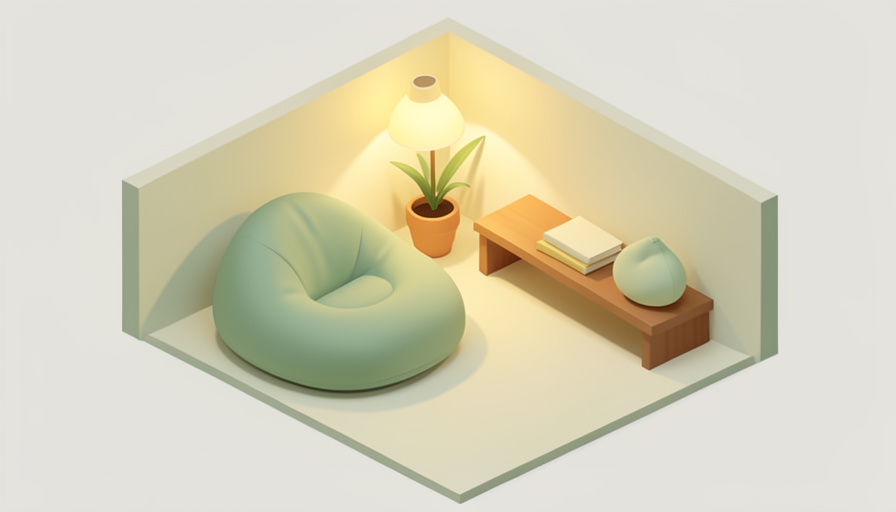
Every wave of outrage about isolation rooms ends the same way: the room is still there next term. The question that would actually change that almost never gets asked.
Each fresh round of school isolation room policy complaints follows a familiar arc. A parent posts, the story spreads, a district promises to look into it, and the room stays in use. Missing from that loop is the practical part: what a school is supposed to do instead when a child is in crisis. There is a real answer, backed by research and used by schools that have cut seclusion sharply. This piece is about those alternatives, and about the honest obstacle that keeps them from spreading faster.
In Brief
- Evidence-based alternatives to isolation rooms exist, including schoolwide behavior support, de-escalation training, and trauma-informed crisis models.
- A genuine calm or sensory space is different from a seclusion room, because a student chooses it, stays supervised, and can leave.
- The main barrier is not knowledge but resources, since alternatives need staffing and training that many schools have not funded.
Table of Contents
Why the Complaints Keep Coming Back
The cycle repeats because outrage alone does not give a stressed classroom a better option. We have covered the two other pieces of this story elsewhere: what these rooms are and the rules around them in our explainer on isolation room complaints, and the policy machinery in our look at the wider policy reviews now underway. What ties them together is a gap. A ban or a bad headline removes a tool without replacing it, and a school with no replacement quietly goes back to the room.
So the productive version of this conversation starts with a different question. It is less about whether the room is wrong, and more about what a school should reach for first when a child is escalating and everyone in the room is worried about safety.
What Schools Can Use Instead
The research here is surprisingly settled. Groups that study this, including the National Association of School Nurses, which calls for eliminating restraint and seclusion, point to a stack of approaches that work together rather than one silver bullet.
| Approach | What it does |
|---|---|
| Schoolwide behavior support (PBIS) | Prevents escalation with clear, taught expectations and tiered help |
| De-escalation and crisis training | Gives staff calming techniques to use before a situation peaks |
| Trauma-informed models like Ukeru | Emphasizes comfort over control, using calm language and soft padding, never holds |
| Collaborative and Proactive Solutions | Works out a recurring trigger with the student so distress is prevented |
| Real calm or sensory spaces | Offers a voluntary, supervised spot a child can choose and leave |
The through line is prevention. Most of these alternatives to restraint and seclusion aim to keep a child from reaching crisis in the first place, or to bring them down gently once they do, rather than containing them after the fact. Schools that commit to the whole package, not one workshop, are the ones that report real drops in seclusion.

The Difference Between a Calm Space and a Seclusion Room
This distinction matters more than any label, and it is where a lot of schools blur the line. A calm corner and a seclusion room can look similar from the hallway. What separates them is control, specifically who has it.
In a real calm or sensory space, the student has agency. They can choose to go, an adult stays with or near them, and they can leave when they are ready. A seclusion room removes all three, since the child is placed there, often alone, and cannot get out. The moment a supposedly supportive space locks or a child is sent to it as a consequence, it has stopped being an alternative and become the very thing parents are complaining about.
The Real Obstacle: Staffing and Training
It is tempting to frame this as schools versus kids. Spend time with the people doing the work and that framing falls apart. On education forums, teachers and paraprofessionals talk constantly about wanting better tools, swapping de-escalation tactics, and asking for the training their districts have not paid for. The will is often there. The staffing is not.
That is the uncomfortable center of the whole debate. De-escalation, individualized behavior plans, and supervised calm spaces all need adults, time, and training. A classroom with one overwhelmed teacher and no behavioral support is exactly the setting where a seclusion room starts to look like the only option, even to people who hate it. A policy that bans the room without funding the alternatives just moves the pressure somewhere else, which is why the schools that succeed treat staffing as part of the safety plan, not a separate budget fight.
This article is general information about school practices, not legal, medical, or clinical advice. Approaches to student behavior and safety should be decided with qualified educators and specialists for a specific child and setting.
What To Know
- Proven alternatives to isolation rooms exist, combining prevention, de-escalation training, and trauma-informed crisis models.
- A calm space is defined by student choice, supervision, and freedom to leave, which a seclusion room denies.
- The barrier is mostly resources, since alternatives require staffing and training many schools lack.
- Bans without funded replacements tend to fail, because the underlying pressure does not disappear.
Frequently Asked Questions
What can schools use instead of isolation rooms?
Schools can use schoolwide behavior support like PBIS, de-escalation and crisis training for staff, trauma-informed models such as Ukeru, Collaborative and Proactive Solutions, and genuine calm or sensory spaces. These work best together, focused on preventing crisis rather than containing it.
Is a calm room the same as a seclusion room?
No. A calm or sensory space is voluntary, supervised, and something a student can leave. A seclusion room involves placing a child there, often alone, without the freedom to go. The difference is who controls whether the student can leave.
Do alternatives to seclusion actually work?
Research supports them. Schools that fully implement approaches like PBIS, staff de-escalation training, and trauma-informed crisis models report meaningful reductions in restraint and seclusion. The key is committing to the whole system rather than a single training session.
Why do schools keep using isolation rooms if alternatives exist?
Mostly because alternatives require staffing, time, and training that many schools have not funded. An understaffed classroom with no behavioral support is where a seclusion room starts to feel like the only option, even to educators who dislike it.
What is the Ukeru approach?
Ukeru is a trauma-informed, restraint-free crisis model built around comfort over control. Staff are trained to use calming language, supportive body language, and soft padding for protection rather than physical holds or force, aiming to de-escalate without restraint or seclusion.
What This Means
The reason these stories keep cycling is that anger removes a tool but does not hand anyone a better one. The schools that actually reduce seclusion are the ones that invest in the boring, effective alternatives and staff them properly. For more coverage aimed at families and educators, browse Wayodd’s Education and Family & Personal sections. The next time a district promises to review its isolation policy, the question worth asking is simple: what are you funding to replace it?