
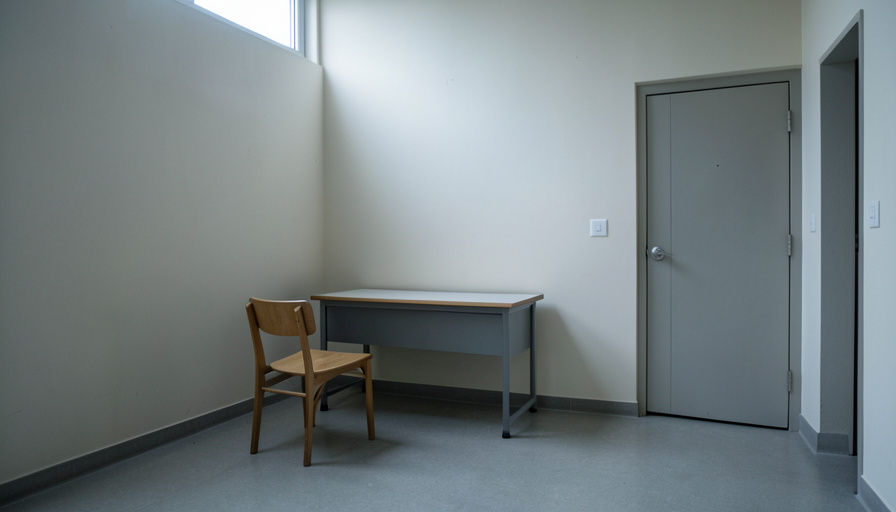
What isolation and seclusion rooms are, why parents are speaking out again, and what the rules actually let a school do.
One parent wrote that their child came home in tears after most of a school day spent alone in a small room, sent there for talking back. Another described a five-year-old with autism placed in a “quiet room” without his glasses. Over the past week, posts like these have stacked up across social feeds, and school isolation room rules, along with the complaints around them, are back in the spotlight. The stories are not new. The volume this time is what caught attention.
So what are these rooms, why do they keep drawing fire, and what can a parent actually do? Here is a grounded look, without the outrage-bait framing.
The Short Version
- An isolation or seclusion room is a space where a student is separated from classmates, sometimes for hours, and in the strictest cases cannot leave.
- Complaints are spreading because parents say the rooms punish minor rule-breaking rather than handle real emergencies, and because children with disabilities end up there far more often than their share of the student body.
- Rules exist, but they vary a lot. Most US states limit seclusion and require parent notification. UK guidance says a pupil must never be locked in. Definitions and enforcement are inconsistent across districts and countries.
Table of Contents
What a School Isolation Room Actually Is
A school isolation room is any dedicated space where a student is separated from the class as a response to behavior. The label changes depending on where you are and who is describing it. In the US you will hear “seclusion room,” “quiet room,” “calm room,” or “reflection room.” In the UK it is often an “isolation room,” a “consequence room,” a “removal room,” or, in the version that upsets people most, a “booth” where a pupil sits facing a partition in silence.
Before going further, one distinction matters more than any of those labels. There is a real legal and practical line between removal and seclusion. Removal usually means a supervised space a student can be sent to for a while, still able to ask to leave or use the bathroom. Seclusion means confinement, alone, where the child is not free to go. Guidance in both countries treats those as different acts, and the second one carries far stricter limits.

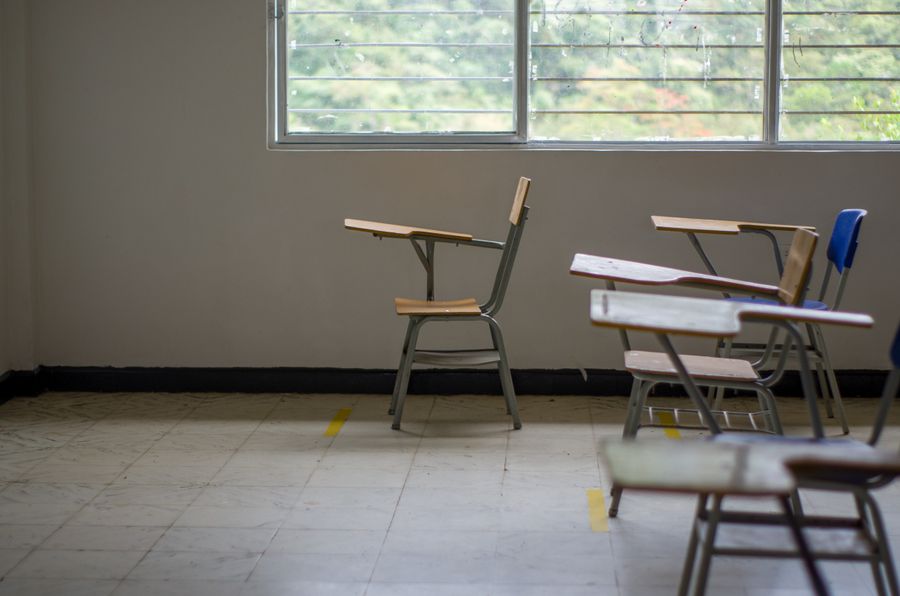
Here is where confusion sets in. Many schools present the room as a supportive tool, a place to help an overwhelmed child settle. Some students genuinely use them that way. The trouble starts when the same room doubles as a punishment for lateness, uniform slips, or backchat, and when a child who wants to leave is told they cannot.
Why the Complaints Are Spreading Now
Two things are happening at once. Adults are sharing their own school memories, and current parents are documenting what is happening to their kids right now. The mix has turned a quiet, district-by-district issue into a running national conversation.
The sharper concern is not that isolation rooms exist. It is what they get used for. Sociologist Charles Bell interviewed 50 families across 15 states for research on the practice, and a consistent pattern showed up: seclusion was frequently applied as punishment for minor infractions rather than as a last-resort safety response. In interviews he described to The Conversation, one North Carolina parent said her third-grade daughter spent more than 100 hours locked alone over behaviors like flipping markers, lying on the floor, and tilting her chair. Other reported triggers included singing loudly and leaving a seat.
Then there is the disability gap, and it is stark. Students with disabilities make up roughly 13% of the school-age population but account for about 79% of children who are restrained or secluded. Federal figures put the number of students restrained or secluded nationally at around 100,000 in a single year, and researchers widely believe the real total is higher because reporting is patchy.
Individual cases keep putting faces on those numbers. In Massachusetts, the family of a five-year-old with autism filed a state complaint after he was repeatedly placed in a school “quiet room,” in some instances, his parents said, without his glasses. The child ended up on medical leave at home.
The pattern crosses the Atlantic too. In the UK, families of pupils with special educational needs have pursued legal action over how long children were held, arguing that vague government guidance let isolation rooms become, in one solicitor’s words, a “dumping ground” for the students hardest to teach.
On Paper vs What Parents Report
| What schools say the room is for | What complaints describe |
|---|---|
| A calm space to de-escalate a crisis | Routine punishment for minor rule-breaking |
| Short, supervised, voluntary | Hours long, and the child cannot leave |
| Used rarely, as a last resort | Same students cycled through repeatedly |
| Applied evenly and fairly | Falls hardest on kids with disabilities |
What the Rules Actually Say
This is where a lot of the frustration lives, because the rules are real but uneven. In the United States, about 44 states have laws or policies limiting restraint and seclusion, and roughly 41 require that parents be notified. Federal guidance is blunter than many parents realize: it says these practices should never be used as punishment or discipline. The catch is that guidance is not the same as an enforceable federal ban, and coverage still varies school to school.
The state-level differences are worth knowing. Washington, for example, allows isolation only to stop behavior that poses a serious risk of harm, and it requires schools to tell parents verbally within 24 hours and in writing within a few business days. Massachusetts has tightened its time-out and seclusion rules, with changes taking effect in 2026 that bar seclusion outside genuine emergencies. A federal proposal, the Keeping All Students Safe Act, has been reintroduced in Congress more than once, but it has not become law.
The UK runs on a different model. Government guidance in England says any space used to separate a pupil should be for a limited time and that a child must never be locked in. The weak point, and the basis for those legal challenges, is that “limited time” is left undefined for isolation rooms, even though separate rules cap how long a pupil can be formally removed from lessons. Campaigners and lawyers have pushed for clearer wording for years.
| United States (typical) | England (typical) | |
|---|---|---|
| When seclusion is allowed | Emergencies or serious risk of harm | Limited use, pupil never locked in |
| Parent notification | Required in most states, often within 24 hours | Expected, but timing less prescriptive |
| Time limits | Vary by state; some cap or ban seclusion | “Limited time,” largely undefined for booths |
| National ban | Proposed, not passed | No outright ban; guidance-based |
The short version of all that: whether your child can legally be placed in one of these rooms, and for how long, depends heavily on where you live.
What Parents Can Check or Do
If your child has been sent to an isolation or seclusion room and something feels off, you have more standing than it may seem. A calm, documented approach tends to work better than an angry email, honestly, because it forces the school to respond in specifics.
- Get the basics in writing. Ask exactly what the room is, who supervises it, how long your child was there, what triggered it, and whether the child was free to leave. Request the incident record, not a verbal summary.
- Learn your local rules. Look up your state or country’s restraint and seclusion policy and the notification timeline. If you were not told within the required window, that is a concrete point to raise.
- Check your child’s plan. In the US, an IEP or 504 plan can spell out how behavior should be handled. In England, an EHCP plays a similar role. Seclusion that ignores those plans is a real problem, especially for a child with a disability.
- Keep a simple log. Dates, durations, the stated reason, and how your child seemed afterward. A pattern across several entries is far more persuasive than one bad day.
- Escalate in order. Teacher, then principal, then the district or governing board, then your state education agency or a disability rights organization. Bring the paperwork to a lawyer if your child’s rights or safety are at stake.
This article is general information, not legal advice. Rules on restraint and seclusion vary by state and country, so consult your district’s policy or a qualified professional for guidance on a specific situation.
What To Know
- Isolation and seclusion rooms are common, and the terminology hides big differences in how they are used.
- The core complaint is misuse: rooms meant for emergencies being applied to everyday rule-breaking.
- Children with disabilities are secluded at rates far above their share of enrollment.
- Rules exist and often favor parents, but notification, time limits, and enforcement differ widely by location.
Frequently Asked Questions
Is it legal for a school to put my child in an isolation room?
In most places, yes, within limits. Many US states permit seclusion only during an emergency or a serious risk of harm, and require prompt parent notification. UK guidance allows separation for a limited time but says a pupil must never be locked in. Using a room as routine punishment often falls outside what the rules actually allow.
What is the difference between isolation, seclusion, and a quiet room?
The names blur together, but the deciding factor is whether the child can leave. Removal or a supervised quiet room usually lets a student ask to return or step out. Seclusion means confinement alone, where the child is not free to go, and that triggers the strictest rules.
How long can a school keep a student in isolation?
It depends on your location. Some US states set time caps or restrict seclusion to the length of the emergency. England says the time should be “limited,” but leaves that word undefined for isolation rooms, which is exactly why families have challenged the guidance in court.
Do schools have to tell parents when a child is secluded?
In most US states, yes. Roughly 41 require notification, and states like Washington set specific windows, such as a phone call within 24 hours and written notice within a few business days. If your school skipped that step, note it and raise it directly.
Are children with disabilities more likely to be placed in these rooms?
Yes, and by a wide margin. Students with disabilities are about 13% of the school population but roughly 79% of those restrained or secluded, according to federal data. Advocates argue this reflects a shortage of proper support, not worse behavior.
What should I do if I think my child was wrongly isolated?
Request the written incident record, compare it against your local rules and your child’s IEP, 504, or EHCP, and keep a log of each event. If the school does not respond, escalate to the district, the state education agency, or a disability rights group, and consider legal advice.
What This Means
The current wave of attention will fade, the way these cycles do. What decides whether anything changes is quieter: state agencies tightening definitions, districts publishing real numbers, and parents who keep asking for the incident report instead of the reassurance. For more coverage aimed at families, browse Wayodd’s Family & Personal and Education sections. If your child comes home describing a room they could not leave, treat it as a records question first. The paperwork is where a complaint either holds up or falls apart.