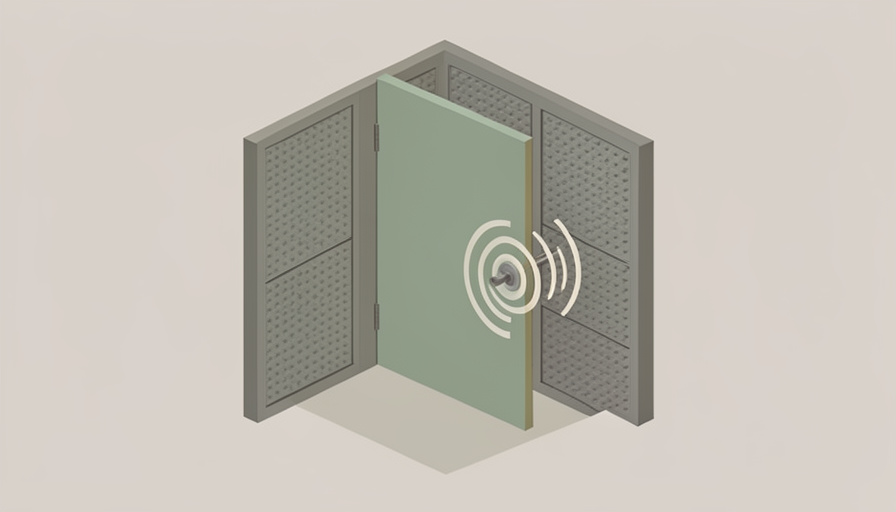

Make a room quiet enough and a strange thing happens: the door becomes the loudest object in it.
The loud door in quiet room design problem has a name now, and design circles cannot stop pointing at it. The spark was a simple observation making the rounds online, that the quietest room in the world also has the loudest door, and it struck a nerve with anyone who has built a calm space only to be jolted by a latch. Once you remove the background hum a room usually hides behind, every click and creak of the hardware stands out. Here is why that happens and how designers quiet it down.
The Quiet Version
- In a very quiet room, the door hardware becomes the loudest thing, because there is no background noise to mask it.
- The culprits are the door hitting the frame, the latch clicking, and hinges squeaking, rather than the door itself.
- Fixes run from cheap felt pads and strike-plate tweaks to soft-close dampers and quiet mortise locks.
Table of Contents
Why the Quietest Rooms Expose the Door
It comes down to masking. In a normal room, a low hum of traffic, appliances, and air handling covers up small mechanical sounds, so a latch click blends into the background. Strip that away in a sound-treated room, and there is nothing left to hide the hardware behind.
That is the idea behind the line that went around design accounts, that the quietest room in the world has the loudest door. A widely shared post put it bluntly, and it landed because the effect is real: the better you soundproof a space, the more the door announces itself. The room gets quieter, and the hardware, unchanged, seems to get louder.
Where the Noise Actually Comes From
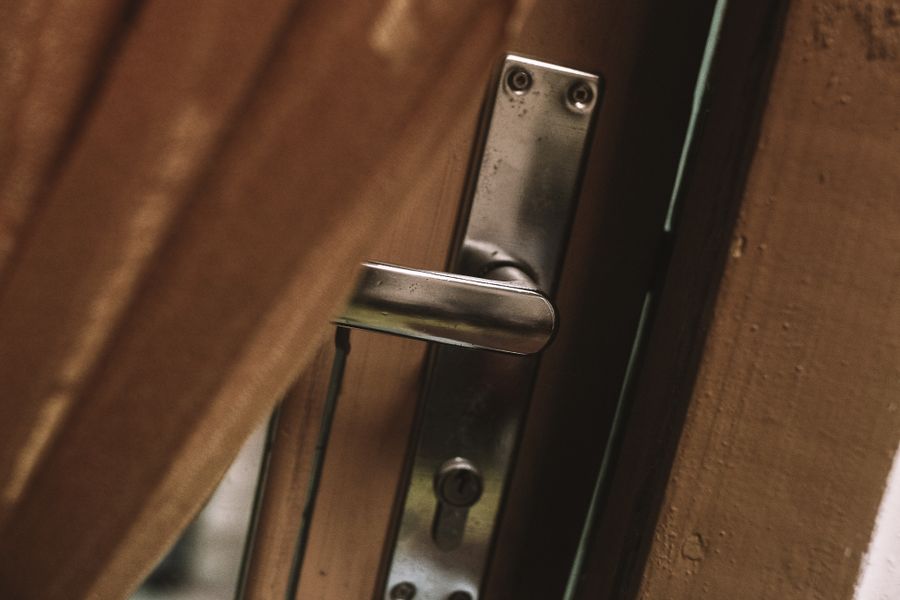
It helps to blame the right part. The door slab itself is rarely the problem; the noise comes from the hardware and the fit. There are three usual sources, and most loud doors are guilty of at least one.
The first is impact, the sound of the door meeting the frame when it closes. The second is the latch, that sharp click as the bolt snaps into the strike plate. The third is friction, the squeak or groan of hinges that need attention. Work out which one is bothering you, because the fix is different for each.
The Fixes, From Cheap to Built-In
The good news is that a quieter door is one of the cheapest upgrades in a room, and you can climb the ladder as far as the budget allows. Here is the range, roughly from a few minutes of work to a hardware swap:
- Stick felt or foam pads on the frame so the slab lands soft instead of hard.
- Add a little foam in the strike-plate hole, or adjust the strike less than a millimeter, to kill the latch click.
- Lubricate or replace hinges to stop the squeak.
- Fit a soft-close damper that slows the door before it reaches the frame.
- Upgrade to a quiet mortise lock, some rated around 55 decibels against roughly 95 for a standard one, for the softest latch.
A rundown of these fixes shows how much of the problem is solved before you spend real money, since felt pads and a strike tweak handle most everyday doors.
Why Designers Care Now
This used to be a niche worry for recording studios, and now it is a mainstream one. As more homes add media rooms, work-from-home offices, and deliberately calm bedrooms, people are treating quiet as a feature rather than an accident, and a jarring door undercuts the whole effect.
Actually, that is the deeper shift worth noticing. Soundproofing conversations used to stop at walls and windows, and the door was an afterthought. Designers pointing at the loud door are really saying that acoustics is a whole-room job, and the last few decibels often hide in the hardware nobody thought to check.
Close It Softly
- A very quiet room removes the noise that normally masks door hardware, so the door stands out.
- The noise is impact, latch click, or hinge squeak, rather than the door slab itself.
- Cheap felt pads and a strike-plate tweak solve most cases before any hardware spend.
- Soft-close dampers and quiet mortise locks handle the rest for a near-silent close.
Frequently Asked Questions
Why is my door so loud in a quiet room?
Because a quiet room has no background noise to mask the hardware. The door’s latch click, the impact against the frame, and any hinge squeak all become obvious once the usual hum of a space is gone. The door did not get louder; the room got quieter around it.
What is the cheapest way to quiet a loud door?
Self-adhesive felt or foam pads on the frame, plus a small piece of foam in the strike-plate hole, cost very little and cushion both the impact and the latch click. Lubricating the hinges handles squeaks. These small fixes solve the majority of everyday loud doors.
What is a soft-close door damper?
It is a hardware device that uses hydraulic or pneumatic dampening to slow a door in the last few inches before it reaches the frame, so it cannot slam. Soft-close hardware removes the impact noise entirely and is common on cabinets and increasingly on room doors.
Are quiet mortise locks worth it?
For a room where quiet really matters, yes. Quiet mortise locks use a cushioned latch bolt that closes far more softly than a standard one, with some rated around 55 decibels versus roughly 95 for a standard lock. They are a bigger spend, but they target the sharp latch click directly.
Is the door slab or the hardware the problem?
Almost always the hardware and the fit. A loud door usually comes from the latch, the strike plate, the hinges, or the impact against the frame, rather than the door panel itself. That is why cheap hardware fixes work so well before anyone considers replacing a door.
The Last Click
The loud door is a small problem with an outsized effect, because it lands in the exact moment you wanted calm. The fix is refreshingly low-tech: figure out whether it is the impact, the latch, or the hinges, then match the cheapest solution to it and climb from there. For more on home design and living spaces, browse Wayodd’s Interior Design section. Get the door right, and the quiet room finally sounds as quiet as it looks.













































No Comments
Leave a comment Cancel