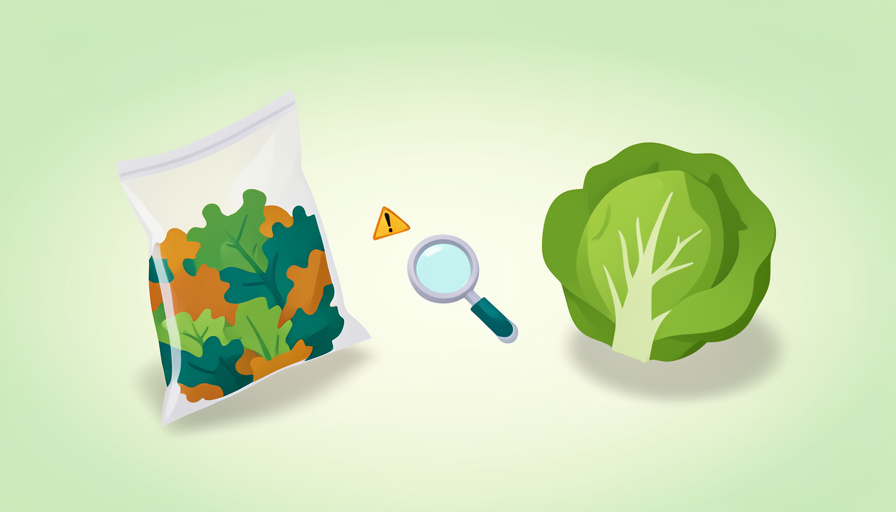

The bag says triple washed and ready to eat, which feels like a promise. The whole head of lettuce next to it looks like more work, dirt in the folds and all. So it seems obvious which is the safer bet. It is not obvious at all, and the convenient choice is often the riskier one.
In the bagged salad vs whole lettuce question, convenience and safety pull against each other. A bag is cut, mixed, and packed from many heads and often many farms, so a single contaminated leaf can seed the whole bag, while a whole head comes from one plant you can inspect and wash yourself. Neither is risk-free, but they fail in different ways. Here is how the Listeria risk actually compares, whether rewashing helps, how to check recalls, and the storage mistakes that matter most.
Quick Take
- A whole head of lettuce often carries less risk than a bag, because a bag pools greens from many sources and processing steps.
- “Triple washed” means cleaned to a commercial standard, not sterilized, so rewashing a ready-to-eat bag can add contamination rather than remove it.
- Wash a whole head yourself, check recalls by brand and date, and store greens cold and dry.
This article is general information, not medical advice. Foodborne illness can be serious, especially for pregnant people, older adults, young children, and anyone immunocompromised. If you feel ill after eating, or belong to a higher-risk group, contact a healthcare professional, and follow current guidance from food-safety authorities.
Table of Contents
Which Is Riskier, and Why
The structure of a bag is the problem. Prewashed salad is made by combining leaves from multiple heads, and sometimes multiple farms, then cutting and washing them together. Cutting creates wounds where bacteria thrive, and shared wash water and equipment let one contaminated leaf spread pathogens across the batch. A whole head, by contrast, is a single intact plant from one source, with fewer cut surfaces and no pooling with other farms’ produce. That is why outbreaks so often trace back to packaged, pre-cut greens rather than to heads of lettuce.
What “Triple Washed” Really Means
It means the greens were cleaned to a commercial standard, not that they are free of every germ. Washing reduces contamination; it does not sterilize, and Listeria in particular can survive and even grow at refrigerator temperatures. The reassuring label describes a process, not a guarantee of safety, and treating “ready to eat” as “risk-free” is the gap that outbreaks exploit. Understanding that limit is the first step to handling either option sensibly.
Should You Rewash Bagged Salad?
Counterintuitively, no, if the bag is labeled prewashed and ready to eat. Food-safety authorities note that rewashing ready-to-eat greens at home does not make them safer and can introduce new contamination from your sink, hands, or counter. For a whole head, the opposite is true: rinsing it under running water, removing the outer leaves, and drying it well, as the FDA describes in its produce safety guidance, meaningfully cuts surface contamination. So wash the head, but leave the ready-to-eat bag alone.
How to Check for Recalls
Leafy greens are recalled often, so a quick check pays off. Note the brand, the product name, the lot or UPC code, and the “best if used by” date printed on the bag, then compare them against current recall notices. The FDA’s recalls and safety alerts page lists active recalls, and you can sign up for alerts so you hear about them before the salad is on your plate. If your bag matches a recall, do not eat it, do not taste-test it, and follow the notice’s return or disposal instructions.
Storage Mistakes That Raise the Risk
How you keep greens matters as much as which you buy. Keep them refrigerated at or below 40 degrees Fahrenheit and never leave them out in a warm kitchen or car, since Listeria grows in the cold but faster when warm. Avoid trapping moisture, which speeds spoilage, so dry whole-head lettuce before storing and skip bags that already hold pooled liquid or look slimy or brown. Store greens away from raw meat and its juices, and respect the use-by date rather than stretching it.
How They Compare
| Factor | Bagged salad | Whole head lettuce |
|---|---|---|
| Sources per unit | Many heads, often many farms | One plant, one source |
| Cut surfaces | Many, where bacteria grow | Few until you cut it |
| Cross-contamination | Higher, via shared wash and equipment | Lower |
| Should you wash it | No, if labeled ready to eat | Yes, under running water |
| Convenience | High | Lower |
Frequently Asked Questions
Is a whole head of lettuce really safer than a bag?
Often, yes, in terms of contamination risk. A whole head comes from a single plant and a single source, with fewer cut surfaces and no mixing with other farms’ greens, and you can wash it yourself. A bag combines many heads and processing steps, so one bad leaf can affect the whole product. Whole lettuce is not immune to contamination, but the way bagged salad is made gives pathogens more chances to spread.
If I can’t rewash bagged salad, how do I make it safer?
Focus on buying and storage rather than rewashing. Choose bags well within their use-by date, avoid any that hold pooled liquid or look wilted, keep them cold from store to fridge, and eat them soon after opening. Check for recalls before eating. If you are in a higher-risk group, cooking greens or choosing a whole head you wash yourself lowers the risk more than anything you can do to a ready-to-eat bag.
Does washing lettuce remove Listeria?
Washing reduces surface contamination but cannot remove all germs, and it does not reliably eliminate Listeria. Rinsing a whole head under running water and removing the outer leaves helps meaningfully, yet no home washing method sterilizes produce. That is why higher-risk individuals are sometimes advised to cook greens, and why storage and recall awareness matter alongside washing. Treat washing as one layer of protection, not a complete one.
Who should be most careful with bagged greens?
Pregnant people, older adults, young children, and anyone with a weakened immune system face higher stakes from Listeria and other pathogens, since infections can be far more severe for them. These groups may want to favor whole heads they wash themselves, or cooked greens, and to be especially strict about use-by dates, storage temperature, and recall checks. When in doubt, they should ask a healthcare provider about current advice.
Convenience Has a Cost, So Handle It Well
Bagged salad is not dangerous by nature, but the way it is produced pools risk in a way a single head of lettuce does not, and its reassuring labels promise less than they seem to. Buy fresh and within date, resist the urge to rewash a ready-to-eat bag, wash whole heads yourself, keep greens cold and dry, and check recalls before you eat. Handle either one with those habits and you get the crunch without the worry. For more on eating well and safely, browse Wayodd’s Diet section.


































































No Comments
Leave a comment Cancel