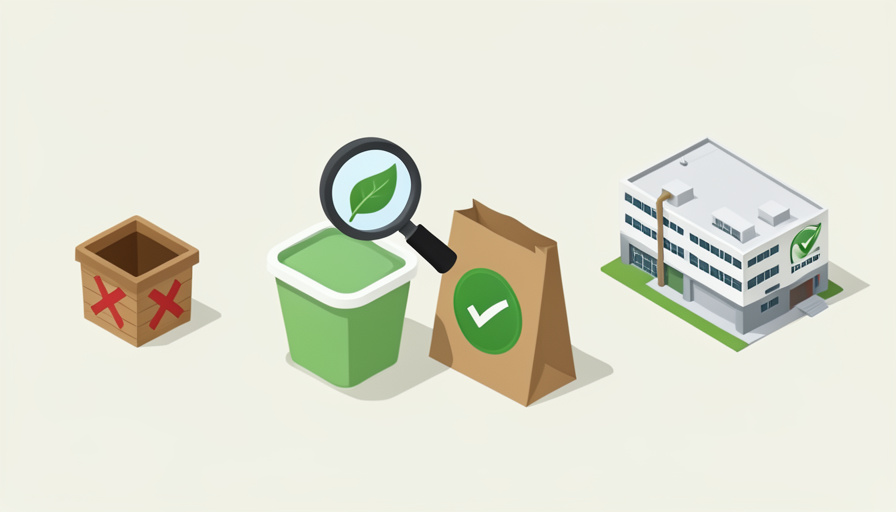

You did the responsible thing. You bought the “compostable” cups for the party, tossed them in the backyard bin afterward, and felt good about it. Months later you dig through the pile and there they are, faded but intact, refusing to turn into soil. The cups were not lying, exactly. They just needed a composting facility your backyard was never going to be.
An industrial compost only label is packaging shorthand for “this breaks down in a hot commercial facility, not in your garden bin,” and the wording is often quiet enough to miss. Home compost piles run cool; industrial ones hit the high, sustained temperatures these materials actually need. Here are eight labels and marks that usually mean industrial only, so you can tell what your bin can handle before you buy.
Quick Take
- Most “compostable” packaging is certified for industrial facilities, not backyard bins, and the label rarely shouts about it.
- Marks like BPI Certified, the seedling logo, and “meets ASTM D6400” all point to commercial composting.
- Only a specific “home compostable” claim or a home certification means your garden pile can break it down.
Table of Contents
1. Just “Compostable,” With No “Home”
The plain word “compostable,” standing alone, almost always means industrial. Under the standards these products are tested against, “compostable” defaults to commercial facility conditions unless the label specifically says home or backyard. So a cup or bag that proudly reads “compostable” and nothing more is telling you it will compost, just not where you probably assumed. The missing word is the whole story: if it does not say home, treat it as facility-only, and check whether your area actually collects for one.
2. “Commercially Compostable” or “Compostable Only in Commercial Facilities”
This is the honest version of the same message, and it means exactly what it says. “Commercially compostable,” “compostable only in commercial facilities,” or “not suitable for home composting” are all telling you the item needs an industrial operation to break down. It is not greenwashing; it is the correct disclosure. The catch is that many people read the word “compostable” and stop there, missing the qualifier. When you see “commercial” or “industrial” near the compost claim, your backyard bin is out, and curbside organics collection or a drop-off is the route.
3. “Compostable in Municipal/Industrial Facilities Where Available”
A softer phrasing, and a slippery one. “Compostable in municipal or industrial facilities where they exist,” or “check locally,” quietly shifts the work to you: the item only composts if your city runs or accepts it at a facility, which many do not. If no such facility serves your area, that “compostable” package has nowhere to go and ends up in the trash regardless of the label. Before trusting this claim, confirm your local program actually accepts certified compostable packaging, because plenty collect food scraps but reject it.
4. The BPI Certified Compostable Logo
In North America, the BPI mark is the big one, and by default it certifies for industrial composting. A product carrying the standard BPI Certified Compostable logo has been independently tested to break down in a commercial facility, not your garden. As Good Start Packaging explains, BPI-certified items should go to a commercial composter that grinds and heats them, so the logo alone is not a green light for the backyard. BPI added a separate home-composting certification in late 2025, so only that specific home mark, not the standard one, clears a garden bin.
5. “Meets ASTM D6400” or “ASTM D6868”
These standard numbers are industrial by definition. ASTM D6400 (for compostable plastics) and D6868 (for coated paper) are the tests that certify a material breaks down under commercial composting conditions, meaning the high heat and managed process of a facility. A package that lists “meets ASTM D6400” is quietly telling you it was validated for industry, not for home. It is the same logic behind a bag that claims to compost but carries no home standard, a pattern covered in our look at biodegradable trash bags with no ASTM cert. The standard cited tells you the setting.
6. The Seedling Logo (EN 13432)
That little sprouting-plant symbol is European, and it also means industrial. The seedling logo signals conformity with the EN 13432 standard, which, like its American cousins, certifies composting in commercial facilities rather than home bins. It is one of the most recognized compost marks in the world, and one of the most misread, because a growing seedling looks like an invitation to bury it in your garden. It is not. Unless a separate home-compostable mark sits alongside it, the seedling means take it to, or collect it for, an industrial composter.
7. “OK Compost INDUSTRIAL” (TÜV Austria)
Some brands use the TÜV Austria certifications, which come in two clearly different versions, and the wording is the tell. “OK Compost INDUSTRIAL” certifies breakdown in professional composting plants only, while “OK Compost HOME” is the one cleared for backyard bins. They look similar at a glance, so the single word after “OK Compost” decides whether your garden can handle it. If the mark says INDUSTRIAL, or just “OK Compost” without HOME, route it to a commercial facility. This pair is a useful reminder that the certifier and the tier both matter.
8. “Made from PLA” or Other Bioplastics
A plant-based material is not the same as a backyard-friendly one. PLA, sold under names like Ingeo, is a common compostable bioplastic made from corn or sugarcane, and it needs the sustained high temperatures of an industrial composter to actually degrade. In a cool home pile it can sit nearly unchanged for years. “Plant-based” and “bio-based” describe what the material is made from, not how it breaks down, and neither guarantees home compostability, or even compostability at all. The same trap appears with “compostable” bioplastics that still hide unwanted chemistry, as in our piece on compostable phone cases that can still contain PFAS.
What Actually Means Home Compostable
The reassuring flip side: a few labels really do clear your backyard bin. Look for the explicit words “home compostable” or “backyard compostable,” the TÜV Austria “OK Compost HOME” mark, the Australian AS 5810 home-compostable standard, or BPI’s dedicated home-composting certification introduced at the end of 2025. These are tested at the lower temperatures a home pile reaches, which is a tougher bar than the industrial standards. If a package carries one of these, your garden can handle it. If it carries any of the eight marks above instead, it needs a facility, no matter how green the packaging looks.
Frequently Asked Questions
Why didn’t my “compostable” cup break down in my backyard compost?
Because it was almost certainly certified for industrial composting, not home. Most compostable foodware is made from materials like PLA that need the high, sustained heat of a commercial facility to degrade, temperatures a backyard pile rarely reaches. In a cool home bin, the item can sit largely intact for years. Unless the package specifically says “home compostable” or carries a home certification, assume it needs a facility, and the fact that it survived your pile is the label working exactly as designed.
Is “commercially compostable only” just greenwashing?
Not on its own; it is actually the honest disclosure. The label is telling you the truth about where the item breaks down, which is a real facility rather than your garden. The greenwashing problem is subtler: brands lean on the recognizable word “compostable” knowing many buyers will not read the qualifier or check whether a facility serves them. So the phrase itself is fair, but it can create a false sense of eco-friendliness if no industrial composting is actually accessible where you live.
How do I know if my area has industrial composting?
Check your local waste or municipal website, or your curbside organics program’s accepted-items list. Many cities collect food scraps and yard waste but specifically exclude compostable packaging, even certified kinds, because it contaminates their process or breaks down too slowly. Some accept it; some run drop-off sites. The only reliable way to know is to look up your specific program rather than assume the “compostable” label guarantees a destination. If nothing local accepts it, the item goes in the trash despite the claim.
Does the seedling logo mean I can compost it at home?
No, that is one of the most common mix-ups. The seedling logo certifies EN 13432, which is an industrial composting standard, so the mark means commercial facilities, not backyard bins, despite the plant imagery. To compost at home you need a separate home-compostable indication, such as “OK Compost HOME” or an explicit “home compostable” claim. If the only mark is the seedling, treat it as facility-only and route it to industrial collection where that exists.
Match the Label to Your Bin
Compostable packaging is a genuine improvement, but only when it reaches the composting it was built for. The eight marks above, from a bare “compostable” to BPI, the seedling, ASTM numbers, and PLA, all point at an industrial facility, while a real “home compostable” claim or a home certification is what clears your backyard. Before you buy or bin, read the word next to the compost symbol and check what your area collects, because a facility-only item in a home pile just sits there. For more on cutting through eco labels, browse Wayodd’s Eco Living section.































































No Comments
Leave a comment Cancel