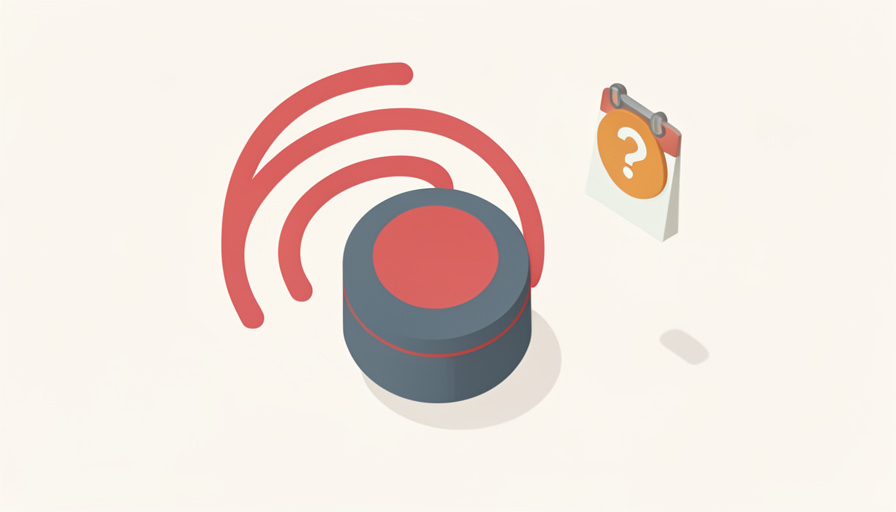

You put in a fresh battery, climb down the ladder, and thirty seconds later it chirps again. At that point it is not asking for a battery. It is telling you something else, and it helps to know its language.
A smoke alarm beeping not battery related is easy to misread, because we are trained to reach for a fresh nine-volt first. But the pattern, the age of the unit, and where the sound seems to come from all carry meaning, and some of those meanings are urgent. These are eight beeps and chirps that point at something other than a dead battery, and what each one is actually telling you to do.
Quick Take
- A sealed ten-year alarm that chirps is at the end of its life and needs to be replaced, not rebattered.
- Three beeps in a repeating pattern is a fire signal, and four beeps is carbon monoxide; neither is a chirp to ignore.
- Interconnected alarms sound together, so the one making noise may not be the one with the problem.
Table of Contents
How We Chose These
We focused on the beeps people most often blame on the battery when the real cause is something else, from the age of the alarm to the type of hazard it is announcing. Each one has a distinct pattern or context, and each points to a specific action rather than another trip to the battery drawer. They range from a simple end-of-life chirp to the patterns you must never treat as a nuisance.
1. A Chirp From a Sealed 10-Year Alarm
Many modern alarms have a non-replaceable battery sealed inside for the unit’s full ten-year life. When one of these chirps, there is no battery door to open; the chirp means the alarm itself has reached the end of its life. The fix is to replace the whole unit. The guidance from the NFPA is to replace any smoke alarm at ten years regardless of type.
2. Chirping That Won’t Stop After a Fresh Battery
If a new battery does not quiet it, the cause is usually elsewhere. The alarm may be at end of life, holding residual charge in its silence circuit, or simply need reseating in its base. Check the manufacture date printed on the back, and a manufacturer’s guide to beep patterns can confirm what the chirp means for your model.
3. Three Beeps, a Pause, Then Three Again
This is not a chirp at all; it is the standard fire signal, three loud beeps followed by a short silence, repeating. It means the alarm is sensing smoke or has been triggered, and it should be treated as real until you are sure otherwise. Get everyone out first and investigate second, rather than assuming it is a false alarm.
4. Four Beeps, a Pause, Then Four Again
On a combination alarm, four beeps in a repeating group is the carbon monoxide signal, a different pattern for a different danger. Carbon monoxide is invisible and has no smell, so this pattern means move everyone to fresh air and call for help, not open a window and wait. Never dismiss the four-beep pattern as a glitch.
5. A Chirp That Seems to Move Around the House
In an interconnected system, all the alarms are wired or linked to sound together, so a signal from one unit can make several chirp or alarm at once. That makes it hard to tell which alarm actually has the fault. Walk the house to find the single unit that is the source, often the oldest one, rather than replacing batteries in all of them.
6. Chirps Right After a Power Flicker
A hardwired alarm can chirp after a brief power outage or surge, either because the power was interrupted or because its backup battery is low even though it runs on house current. Reset it at the breaker if the manual allows, and replace the backup battery. A wired alarm still needs that backup to work when the power is out.
7. Random Chirps From Dust, Steam, or Insects
Alarms placed near kitchens and bathrooms, or in dusty spaces, can chirp or false-alarm when steam, cooking particles, dust, or even a small insect reaches the sensing chamber. Vacuum the alarm gently and wipe around the vents, and consider relocating a unit that sits too close to a stove or shower. A clean chamber often ends the mystery chirps.
8. Chirping in a Cold Garage or Attic
Temperature matters. An alarm in an unconditioned garage, attic, or porch can chirp when the space drops below or climbs above the range it is rated for. Check the manual for the operating temperature, and if the location runs to extremes, a unit designed for that environment will behave better than a standard indoor alarm.
One safety note worth repeating: never pull an alarm off the ceiling or remove its battery just to stop a chirp, since that leaves you unprotected. If a unit will not settle, replace it, and make sure you can tell the three-beep fire pattern from the four-beep carbon monoxide one.
The Takeaways
- A chirp from a sealed ten-year alarm means replace the unit, since there is no battery to change.
- Three repeating beeps signal fire and four signal carbon monoxide, and both call for action, not resetting.
- Interconnected alarms sound as a group, so track down the single source unit.
- Power flickers, dust and steam, and temperature extremes all cause chirps that a new battery will not fix.
Frequently Asked Questions
Why does my smoke alarm keep chirping after I changed the battery?
Often because the battery was never the problem. The alarm may be at the end of its ten-year life, holding a bit of residual charge, or needing to be reseated in its base. Check the manufacture date on the back, and if the unit is near ten years old, replace it rather than keep swapping batteries.
What do three beeps on a smoke alarm mean?
Three loud beeps in a repeating pattern is the standard fire signal, meaning the alarm is sensing smoke or has triggered. It is different from a single chirp. Treat it as a real alarm, get everyone out, and only investigate the cause once you are safely outside.
What does a four-beep pattern mean?
Four beeps in a repeating group, on a combination alarm, is the carbon monoxide signal. Carbon monoxide is colorless and odorless, so this pattern means get everyone to fresh air and call emergency services. Do not treat the four-beep pattern as a malfunction or wait it out indoors.
Why do all my smoke alarms go off at once?
Because they are interconnected, so when one detects smoke or faults, it signals the others to sound together. This is a safety feature, but it makes it hard to spot the unit at fault. Walk through and find the single source alarm, which is frequently the oldest one, instead of resetting all of them.
Do sealed 10-year smoke alarms need new batteries?
No. Their lithium battery is sealed inside for the life of the unit and cannot be replaced. When a sealed ten-year alarm chirps for end of life, the correct fix is to replace the entire alarm. Trying to open it to change a battery will not work and can damage the unit.
Read the Pattern Before the Battery
A chirping smoke alarm is easy to treat as a battery nuisance, but the pattern and the age of the unit usually tell a more specific story. Check whether it is a sealed ten-year alarm, learn the three-beep fire and four-beep carbon monoxide patterns, and track a roaming chirp back to its source. Read the beeps correctly and you fix the real problem instead of feeding it batteries. For more on keeping a home safe and sound, browse Wayodd’s Home Improvement section.












































No Comments
Leave a comment Cancel