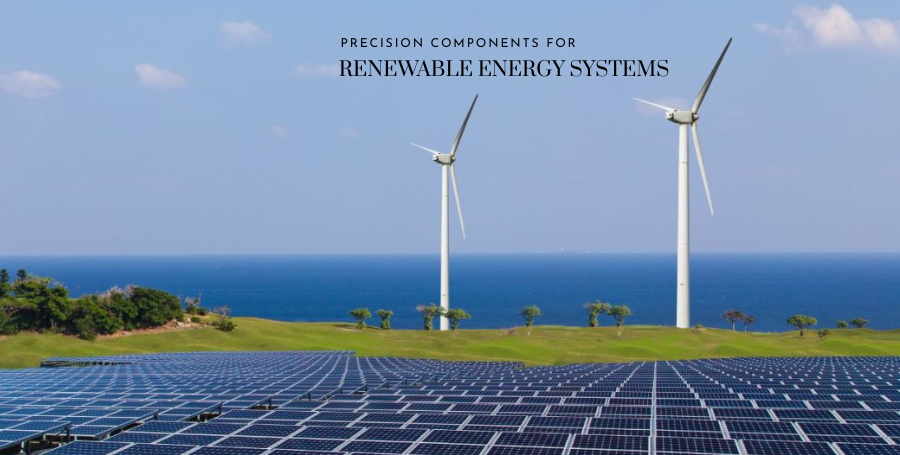

Renewable energy sources like wind, solar and hydropower are going to be the future and the world is already enduring a major change in this guidance. The use of high-quality and reliable renewable energy systems will be the only way to meet the global energy demand along with reducing the environmental impact. The quality and performance of the precision components, which are used in the manufacture of these systems, are the main factors. Precision components manufacturers that help in the production of these critical parts which are like turbine blades and solar panel frames; they also help in the making of hydropower turbine systems, thus keeping the labor of the renewable energy solutions to operate efficiently and reliably for many more years.
Understanding Precision Components
Precision components are specialized parts with very high accuracy. These components follow very strict requirements in dimension and functionality. Moreover, precision components manufacturing is the most important step in the production of complex machinery like that of the renewable energy system, as it guarantees the smooth operation, efficiency and longevity of the whole system. Parts that are made with precision are the primary focus of manufacturers who make them, to make sure that these parts will be extremely reliable and perform well even if the surrounding conditions are tough.
Key Characteristics of Precision Components:
High veracity: They are manufactured according to the exact volume and with the tightest favors to make sure they fit and work perfectly together.
Strong supplies: These are being made with top-quality metals, alloys or mixtures. They are able to take the load, oppose wear and tear and cope with harsh eco-friendly conditions.
Consistency: The performance of several different units is assured by the application of strict quality control measures.
Complex Designs: They are able to meet very sophisticated design requirements that come with the development of advanced energy systems.
Renewable energy systems are guaranteed to be efficient in their operation, safe and with very little maintenance required, thanks to the precision components manufacturers’ dedication to supplying top-notch materials and tolerances.
Role of Precision Components in Renewable Energy Ways
Precision components are indispensable to the success of renewable energy systems in terms of efficiency, reliability, and longevity. The application of high-quality parts coming from precision components manufacturers means that each system can work up to its potential while maintenance and downtime are significantly cut down.
Wind Energy:
Turbine Blades and Gearboxes: Precision components makers are responsible for the production of blades and gearbox parts that meet strict tolerances and can therefore endure extreme wind conditions.
Aerodynamic Performance: Accurate specifications not only allow to extract maximal energy from wind but also to decrease stress and wear of the blades and the gear.
Durability: Precision-engineered components become stronger and more reliable, thus leading to the same lower operational cost as the whole life cycle of a turbine is shortened.
Solar Energy:
Panels, Frames and Connectors: Essential parts such as mounting systems, frames and electrical connectors are fabricated with high precision in order to guarantee stability.
Structural Honesty: Accurate fabrication ensures that even during severe weather solar panels will remain secure.
Efficient Energy Capture: Sunlight absorption is improved due to durable and properly aligned components, thus also overall energy output.
Hydropower:
Turbine Components and Control Systems: The manufacturing of precision components results in a supply of high-end parts capable of enduring water pressure and rotational stress.
Operational Efficiency: Components facilitate the uninterrupted flow of water and conversion of energy.
Longevity under Pressure: High-quality, accurate parts cause less wear and tear and consequently, prolong the life of the system.
By offering high-quality, precision-crafted components, companies that specialize in Engineering precision components manufacturers have made it possible for renewable energy sources to be used hassle-free and efficiently in all sectors.
Manufacturing Processes for Precision Components
The making of high-quality precision parts for renewable energy systems is basically dependent on the advanced manufacturing processes that are applied to giving the parts their properties of being accurate, durable, and trustworthy. The Engineering precision components manufacturers are the ones who take full responsibility for the combination of traditional and modern techniques for the purpose of achieving the rigorous standards in wind, solar and hydropower applications.
Mainly Machining and Manufacturing Techniques:
CNC Machining: Computer Numerical Control (CNC) machining is the method in which manufacturers can create parts with very close tolerances and intricate shapes. Turbine gears, solar panel frames, and parts for hydropower turbines are some of the main applications of this process.
Casting: High-quality precision casting techniques, one of which is investment casting and the other being sand casting, are part of the process that leads to high-strength, intricate parts that have consistent quality. Turbine housings and other load-bearing components are examples of where this is practiced.
Additive Manufacturing (3D Printing): The modern additive manufacturing allows for the production of high-performance, lightweight parts with difficult designs that cannot otherwise be realized through the use of the traditional methods. The technology is becoming more and more in demand for prototype development and specialized renewable energy components.
Quality Control and Testing:
Dimensional Accuracy: A very strict measurement system guarantees that every single piece will be of the required dimensions.
Material Testing: A series of tests is carried out on the components to assess their hardness, resistance to corrosion, and fatigue strength with a view to assuring long-term performance.
Performance Testing: The testing under simulated operational conditions is done to reveal the potential failures that might occur during the actual use of the components, and thus the reliability in wind, solar and hydropower systems is ensured.
Challenges in Manufacturing Precision Components for Renewable Energy
Renewable energy systems depend heavily on precision components, however, the manufacturers still have to go through several difficulties to produce parts that are high quality and durable enough to stand up to the performance standards.
Key Challenges:
Material Selection: the right materials selection is necessary to resist the negative effects of the environment stress, corrosion, and high operation loads. Precision components manufacturers have to consider and gradually change depending on system requirements the factors of strength, weight, and longevity.
Complex Geometries and Custom Designs: the difficulties of the manufacturing processes are due to the fact that the power generation components require not only intricate but different shapes and sizes. For these precise designs, specialized machining and additive manufacturing are of vital importance.
Adhesion to Industry Standards: International and local standards must be complied with by parts to guarantee their safety, accuracy and consistency with other systems. This entails ISO certifications, ASTM standards and energy-specific regulations.
Consistency and Scalability: the problem of maintaining the same quality across large production volumes is an issue that is very difficult to deal with, especially in the case of high-precision parts used in turbines, solar panels and hydropower equipment.
The challenges faced by precision components manufacturers have been won over, thus ensuring that the power systems work in an efficient, safe and sustainable manner, thereby facilitating the transition to the use of clean energy worldwide.
Future Trends in Precision Components for Renewable Energy
The renewable energy industry is in a state of constant change and demand for Engineering precision components manufacturers to provide new technologies.
Key Future Trends:
Advanced Materials: Lightweight, high-strength alloys and composites production will be the main factor for proficiency and power of wind, solar and hydropower parts.
Smart Technologies & IoT Unity: Sensors and IoT-enabled components provide real-time monitoring, auguring care and system performance improvement.
Integrality & Eco-Friendly Tools: Production companies are using more and more recyclable and low-impact materials to minimize. The conservation impact of renewable energy sources.
Automatism in Manufacturing: Robotic and AI-assisted methods lead to more precision, fewer mistakes and greater output.
Customization & Modular Design: The components of the future will be those with versatile structures catering to various renewable energy uses, thus, speeding up installation and increasing operational efficacy.
Conclusion
Precision components are essential when it comes to the performance, dependability, and sustainability of renewable energy systems. Using precision components manufacturing methods, implementing intelligent technologies, and taking care of the environment are all ways of precision components makers to guarantee that wind, solar, and hydropower plants work at full capacity and satisfy the worldwide demand for energy. In a partnership with top-notch manufacturers, power generation companies can manufacture very strong and high-efficient systems that are the main factor for the transition to an environmentally friendly and sustainable energy future.
FAQs
What are precision elements in renewable energy systems?
Precision elements are very accurate parts that are produced to very tight tolerances and are thus more reliable and perform better in wind, solar and hydropower systems.
Why are precision elements important for renewable energy sources?
They not only enhance efficiency but also contribute to the durability and safety of the system, thus minimizing the downtime and maintenance while grabbing the most energy from the system.
What are the precision elements’ manufacturing techniques?
CNC machining, casting and additive manufacturing are some of the common methods used along with strict quality control.
What challenges do manufacturers experience?
Challenges are choosing the right materials, making complex designs, and sticking to industry standards.
How are trends in the future affecting the precision components?
Smart technologies, IoT integration, eco-friendly materials and automation are among the factors, That are driving innovation and efficiency in the future.
































No Comments
Leave a comment Cancel