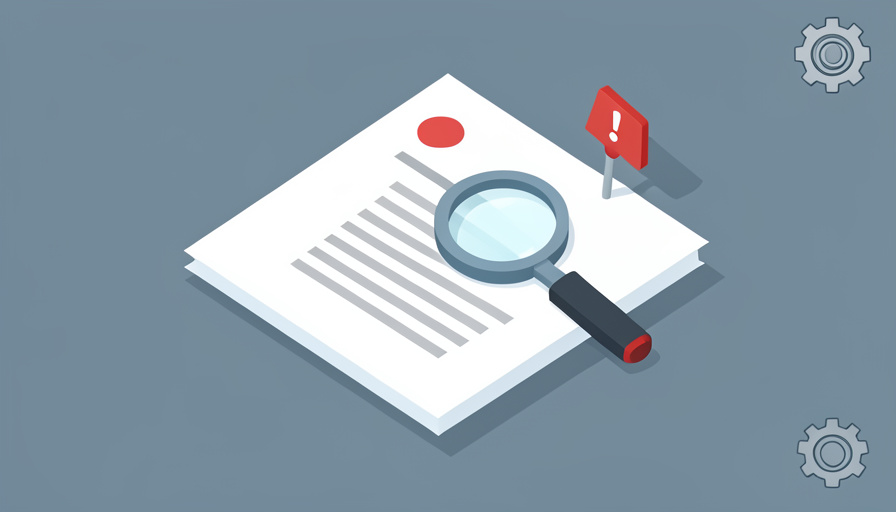

You did the modern thing. You asked an AI to write your resume, it produced something that read impressively, you sent it to fifty openings, and then came the silence. No interviews, not even rejections. It is tempting to blame the job market, but often the problem is sitting in the document itself: AI-written resumes have a set of recurring habits that either confuse the software screening them or make a recruiter’s eyes glaze over. The good news is that every one of those habits is fixable once you know what to look for.
AI resume ATS rejection usually traces to a handful of predictable flaws, not bad luck, and it helps to know how the system actually works: an applicant tracking system does not usually slam a door on you by itself, it parses and ranks your resume so a human sees the strongest matches first. A resume it cannot read cleanly, or that reads as generic filler, sinks down the pile. Here are eleven red flags common in AI-generated resumes, and the fix for each.
Quick Take
- The biggest culprits are formatting an ATS cannot parse, tables, columns, graphics, and generic AI phrasing with no real achievements.
- Tailoring matters: an untailored AI resume misses the job’s keywords, while a stuffed one reads as spam to both software and people.
- Fix it by using a clean, single-column layout, standard headings, honest specifics with numbers, and your own edited voice.
The 11 Red Flags and Their Fixes
Work through these in order; the formatting ones matter most for getting parsed at all.
- Tables and columns. Many systems read a resume in a straight line and scramble multi-column layouts or tables. Fix: use a simple, single-column layout with clear text.
- Graphics, icons, and photos. Images, logos, and skill bars are ignored or garbled by parsers, and can take real content with them. Fix: remove visuals and state everything in plain text.
- Generic AI buzzwords. Phrases like “results-driven, dynamic professional” say nothing and read as filler to recruiters. Fix: replace them with specific, quantified achievements.
- No tailoring to the job. A one-size AI resume misses the exact terms the posting and its software look for. Fix: mirror the job description’s key skills and titles, honestly, for each application.
- Keyword stuffing. Cramming in keywords, which AI does when told to optimize, reads as spam to software and people alike. Fix: weave relevant terms naturally into real accomplishments.
- Fabricated skills or experience. AI sometimes invents plausible-sounding details you cannot back up, which unravels in interviews. Fix: cut anything that is not genuinely true of you.
- Non-standard section headings. Creative labels like “My Journey” confuse parsers expecting known sections. Fix: use standard headings such as Experience, Education, and Skills.
- A problematic file format. An image-based PDF or an unusual format can be unreadable to the software. Fix: submit a clean, text-based file in the format the employer requests, often a simple PDF or a Word document.
- Contact details in the header or footer. Some parsers skip headers and footers, losing your name or email. Fix: put contact information in the main body of the document.
- Writing that reads as AI-generated. Uniform, overwrought, cliché-heavy prose signals a template to an experienced recruiter. Fix: edit it into your own plain voice and delete the clichés.
- Inconsistent dates and formatting. AI output can mix date styles and spacing, which looks careless and can confuse parsing. Fix: standardize one date format and consistent structure throughout.
How to AI-Proof Your Resume
Using AI is not the problem; shipping its first draft unedited is. Treat what the AI gives you as raw material, then do the human work: strip it down to a clean single-column layout with standard headings, replace vague claims with specific results and numbers you can defend, and tailor the keywords to each job by honestly matching the posting. Read it aloud to catch the robotic phrasing and rewrite it as you would actually speak. Finally, save it in the requested format and check that a plain-text copy still reads sensibly, which is a quick proxy for how the software will see it. That process keeps the speed of AI while removing the traits that get resumes filtered out.
Frequently Asked Questions
Does the ATS automatically reject AI-written resumes?
Not exactly. An applicant tracking system does not usually detect that a resume was written by AI and bin it for that reason. What happens is more indirect: if the AI produced a layout the system cannot parse, or content that misses the job’s keywords, your resume ranks poorly and a human may never see it, which feels like an automatic rejection. Recruiters, meanwhile, can spot generic AI phrasing and lose interest. So the AI itself is not flagged, but its typical output, messy formatting and vague, untailored content, is exactly what causes both software and people to pass you over.
Is it bad to use ChatGPT or AI to write my resume?
No, used well it is a genuine time-saver. AI is good at drafting, restructuring, and suggesting phrasing, which can get you past the blank page quickly. The mistake is submitting its output as-is, because that output tends to carry the exact red flags that hurt you: generic language, parsing-unfriendly formatting, and no tailoring to the specific job. Use AI to draft, then edit heavily for a clean format, honest specifics, and your own voice, tailoring to each posting. Done that way, AI improves your resume; done lazily, it produces a polished-looking document that quietly underperforms.
How do I know if my resume is ATS-friendly?
A quick test is to save or copy your resume as plain text and read it. If the sections stay in a sensible order, your contact details survive, and nothing turns into gibberish, the software will likely parse it well; if columns collapse into nonsense or information disappears, that is a warning sign. Beyond that, check that you use standard section headings, a single-column layout, no critical text in images or headers, and the file format the employer asked for. Matching the job description’s key terms honestly rounds it out. These simple checks catch the large majority of parsing problems.
Should I tailor my resume for every single job?
For the roles you genuinely want, yes, at least lightly. You do not need to rewrite everything, but adjusting your resume so it reflects the specific skills, tools, and title in each posting materially improves how both the software and the recruiter respond, since matching relevant terms is much of what ranking is based on. A generic AI resume blasted to fifty jobs performs worse than a tailored one sent to ten. Keep a strong master version, then tweak the summary, skills, and emphasis for each application. It takes minutes per job and is one of the highest-return habits in a job search.
Make It Readable, Real, and Yours
An AI-written resume fails not because a machine caught you using a machine, but because AI’s default output carries traits that sink applications: formatting software cannot read, generic language recruiters ignore, and no tailoring to the job in front of them. Fix those and you keep AI’s speed without its penalties. Use a clean single-column layout, standard headings, honest and specific achievements with numbers, keywords matched to each posting, and your own edited voice. Run the plain-text check before you send. Do that, and the resume that used to vanish into the void starts getting read. For more on working smarter with technology, browse Wayodd’s Computing section.































































No Comments
Leave a comment Cancel