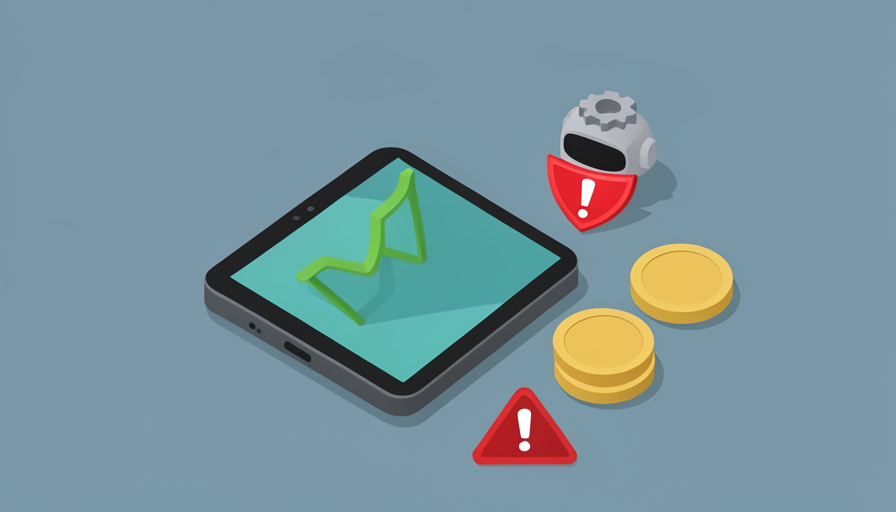

It starts with someone you sort of trust. A creator you follow posts screenshots of steady gains, mentions a private group where a clever “AI” does the trading, and says a few spots just opened up. The people inside seem real and friendly, the returns look modest enough to believe, and there is a gentle nudge that the window is closing. It feels less like a pitch and more like a favor between people who follow the same person. That feeling is the product.
Deciding whether an AI trading group scam is worth the risk is usually the wrong frame, because the honest answer is that these influencer-linked groups promising steady weekly returns are almost always a scam, and the safe move is to avoid them entirely. “AI” is the fashionable cover story for very old cons: guaranteed returns, a platform you can pay into but never cash out of, and recruitment dressed up as generosity. Here are the red flags that give it away, how the scheme actually works, and what to do instead.
Quick Take
- Promises of guaranteed or fixed weekly returns are the single biggest red flag; real markets never work that way, whatever the “AI” is supposedly doing.
- The classic trap is a slick platform that shows growing balances but blocks or “taxes” withdrawals, so your deposits are gone the moment you send them.
- Yes, avoid them. If you are pressured to deposit quickly, recruit others, or move to a private app, treat it as a scam and walk away.
This article is general information about spotting scams, not financial or investment advice. It does not recommend any investment. If you are unsure about an opportunity or think you have been targeted, consult a licensed financial professional and report concerns to your national consumer-protection or securities regulator.
Table of Contents
What These “AI Trading” Groups Look Like
The setup is consistent. An influencer, or an account posing as one, promotes a private community, often on Telegram, WhatsApp, Discord, or a paid group, where a proprietary “AI” or trading bot supposedly generates reliable profits. Members are shown a dashboard or app with a climbing balance and testimonials from other happy members. You are invited to deposit funds, usually in crypto, into a platform the group controls, with the promise that the AI will trade them and grow your money. Early on you might even be allowed to withdraw a small amount, which cements your trust. Then you are encouraged to put in more, and to bring friends.
The Red Flags That Give It Away
Before believing any of it, run down the warning signs. Any one of these should stop you; several together mean walk away.
- Guaranteed or fixed returns. “Two percent a day” or “steady weekly profits” is impossible in real trading. Genuine investing carries risk and variable outcomes; a promise of consistent gains is the defining mark of a scam.
- Pressure and urgency. Limited spots, a closing window, or a countdown to deposit are engineered to stop you thinking. Real opportunities do not expire in an afternoon.
- Deposit to their platform. You are asked to send money, especially crypto, to an app or wallet the group controls rather than a regulated, independent exchange or broker you already use.
- Recruitment for rewards. Being paid or promoted for bringing in new members is a hallmark of a Ponzi or pyramid structure, where new deposits pay old ones until it collapses.
- Vague “AI” with no substance. The bot is a black box. There is no verifiable track record, no named regulated firm behind it, and no clear explanation beyond “the AI does it.”
- Withdrawal problems. When you try to cash out, you hit delays, or a sudden “tax,” “fee,” or “verification deposit” you must pay first. That money is also lost.
Why “AI” Is the Perfect Cover Story
The scam works because “AI” is both trendy and mysterious. Most people cannot evaluate whether an algorithm really can trade profitably, so “our AI handles it” shuts down the natural question of how the returns are possible. It borrows the credibility of a real technology boom, and it conveniently explains away the lack of a human track record or a regulated fund. The same con was once “forex robots” and “crypto arbitrage bots”; the mechanics are identical, only the buzzword changed. Regulators have warned that fraudsters are increasingly using AI claims to lend legitimacy to old investment schemes, so the label should raise your suspicion, not lower it.
How the Scam Actually Plays Out
The lifecycle is predictable. First comes trust-building, sometimes over weeks, with friendly chat, social proof, and a creator’s implied endorsement. Then a small test withdrawal is allowed, proving to you that the money is “real” and reachable. Encouraged, you deposit more, and you may recruit friends or family, spreading the damage. The dashboard keeps showing gains, but those numbers are just pixels the operators control. When you try to withdraw a meaningful amount, the excuses begin: a tax to release funds, an account “upgrade” fee, a compliance hold. Each demand is a fresh attempt to extract more before you realize the truth. Eventually the group goes quiet, the app disappears, and the money is gone, because it was never being traded at all.
Should You Avoid Them? Yes, and Here Is the Test
The safe rule is simple: if an opportunity promises guaranteed or unusually steady returns, pressures you to deposit fast, routes your money through a platform the promoter controls, or rewards you for recruiting, avoid it. It does not matter how genuine the influencer seems, how friendly the group feels, or how convincing the screenshots look, since all of those are cheap to fake and are exactly what the scam manufactures. Legitimate investing happens through regulated brokers and exchanges, carries real and disclosed risk, and never guarantees weekly profit. When something clears none of those bars, the expected value of participating is a loss. Walking away costs you nothing; staying can cost you everything you deposit.
How to Protect Yourself and What to Do If You’re In
If you are still deciding, stop before you deposit and verify independently: check whether the firm is registered with your country’s securities regulator, search the name alongside the word “scam,” and ask how the returns are generated in specific terms. If you are already involved, stop sending money immediately, and do not pay any “fee” or “tax” to unlock a withdrawal, since that is just another stage of the theft. Screenshot everything, including the app, chats, and any wallet addresses, and report it to your national fraud or consumer-protection body and to the platform where you were contacted. If you sent crypto, notify the exchange you bought it from. The FTC’s guidance on cryptocurrency and scams is a useful primer on the warning signs. Recovering funds is often difficult, but reporting helps authorities track the operators and can warn others before they lose money too.
Frequently Asked Questions
Can an AI really make guaranteed weekly trading profits?
No. No system, human or AI, can guarantee steady weekly returns, because markets are inherently uncertain and risk cannot be engineered away. Real algorithmic trading exists, but it produces variable results, experiences losses, and is run by regulated firms that disclose that risk rather than promising fixed gains. When a group claims an AI delivers reliable, consistent profit with little or no downside, that claim itself is the proof it is a scam. The technology is being used as a story to make an impossible promise sound plausible, not as a genuine explanation of how the money grows.
The influencer seems real and has lots of followers. Doesn’t that make it safer?
Not at all. Follower counts and a polished presence are easy to buy or fake, and even genuine, well-known creators are sometimes paid to promote schemes they never checked, or have their identities impersonated by scammers. A real person vouching for an “opportunity” adds social proof, which is precisely the lever the scam pulls. Judge the offer by its mechanics, guaranteed returns, pressure, a controlled deposit platform, recruitment, not by who is promoting it. The involvement of a familiar face should not change your assessment of red flags that, on their own, already point to fraud.
I was allowed to withdraw once, so it must be legitimate, right?
That small successful withdrawal is a deliberate tactic, not proof of legitimacy. Letting you take out a little early builds your confidence so you deposit far more, which is when the withdrawals stop working. It costs the operators a small amount to make the larger theft possible. This pattern, a working first cash-out followed by blocked or “taxed” withdrawals once the balance is significant, is one of the most common signatures of these scams. A single easy withdrawal early on should not reassure you; if anything, combined with the other red flags, it fits the script exactly.
Is it a scam if they ask me to pay a fee or tax to withdraw?
Effectively, yes. Legitimate platforms deduct fees from your balance; they do not demand a separate upfront payment before releasing your own money. A required “withdrawal tax,” “release fee,” “insurance deposit,” or “account upgrade” to access funds is a classic advance-fee scam layered on top of the original one, designed to extract more from you at the moment you are desperate to recover what you put in. Do not pay it. Paying does not unlock anything, because there is nothing to unlock. Treat any such demand as final confirmation that the operation is fraudulent and stop engaging.
Trust the Red Flags, Not the Screenshots
Influencer-linked “AI trading” groups sell a feeling of trusted, effortless, insider access to gains, and every part of that feeling is manufactured. The AI is a story, the screenshots are pixels, the friendly members are part of the pitch, and the platform exists to take deposits, not to trade them. The red flags are consistent and easy to remember: guaranteed returns, urgency, a controlled deposit platform, recruitment rewards, and blocked withdrawals. When you see them, the right move is not to weigh the odds but to walk away, because the odds are designed against you. For more on spotting cons before they cost you, see our guide to a QR code parking payment scam, or browse Wayodd’s Business & Markets section.
































































No Comments
Leave a comment Cancel