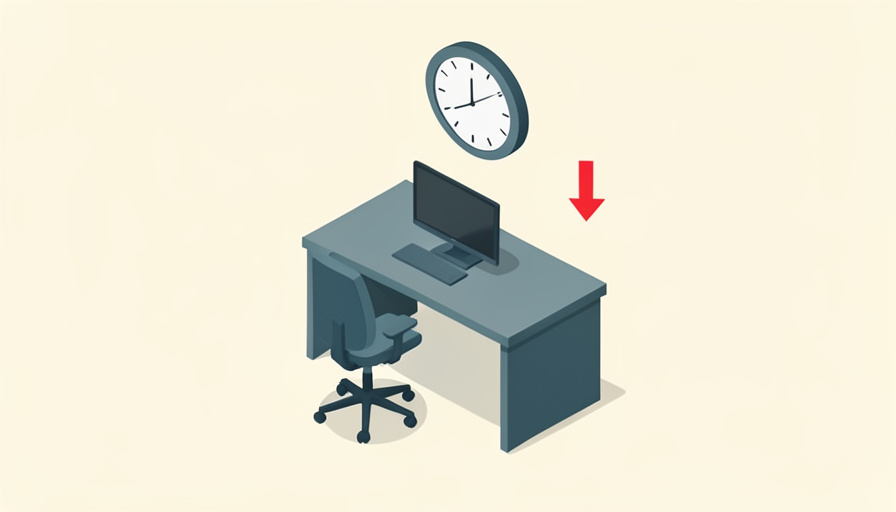

A rule meant to squeeze more work out of a team can do the opposite the moment people decide to follow it exactly.
The CTO desk time rule backlash making the rounds started with one blunt line: if you are not at your desk, it does not count as work. According to a widely shared story on the r/MaliciousCompliance forum, the team responded by stopping work the instant they left their desks, and output visibly dropped. Treat the specific tale as an internet anecdote rather than verified fact, because the reason it spread is what matters. It touched a real nerve about a measurement mistake that plenty of workplaces keep making. This piece unpacks why desk time is a bad proxy for productivity, and what the research says actually helps.
The Gist
- A viral post described a CTO ruling that time away from a desk is not work, and a team that maliciously complied until output fell.
- The story resonated because time at a desk measures presence, not productivity, which are very different things for knowledge work.
- Research finds surveillance-style desk metrics tend to raise stress and counterproductive behavior, while outcome-based measures work better.
Table of Contents
The Post That Struck a Nerve
The story is simple, which is part of why it traveled. A new CTO declared that work only counts when you are at your desk, and the team took that literally, downing tools the moment they stepped away for a call, a whiteboard session, or a think. The result, as told, was slower delivery and a policy that quietly embarrassed itself.
Whether or not it happened exactly that way, it did not spread in a vacuum. Similar threads pile up constantly, from workers logging every time they leave a desk to people written up for stepping away too often. The volume of these posts is the real signal, and it points at a widespread management instinct to measure the wrong thing.
Why Desk Time Isn’t Productivity
Here is the core error, stated plainly. Time at a desk measures presence, and presence is not output. For knowledge work especially, some of the most valuable activity happens away from the keyboard, in a hallway conversation, a walk that untangles a problem, or a whiteboard nobody logs. A rule that only rewards a body in a chair punishes exactly that work.
This is the trap that workplace researchers call presenteeism, where people are present but not productive, and presenteeism can cost more than absence because it hides in plain sight. A desk-time rule does not reduce that problem. It manufactures more of it, by teaching people that looking busy at a desk is the goal.
What the Research Says About Watching People
The data on monitoring is not kind to the desk-time instinct. In workplace surveys, a majority of monitored employees, around 72 percent, say the monitoring does not actually improve their own productivity, according to 2026 employee-monitoring statistics. The human cost is real too, with a large share reporting stress from being watched and a meaningful group taking fewer breaks just to avoid looking idle.
Worse, control-focused surveillance can invite the behavior it fears. When monitoring feeds directly into judgment, people optimize for the metric rather than the mission, nudging mouse cursors and padding online time instead of doing better work. The desk-time rule is that dynamic in its crudest form.
| Surveillance-style metric | Outcome-based metric |
|---|---|
| Counts hours present at a desk | Counts deliverables completed |
| Rewards looking busy | Rewards finishing the work |
| Easy to game with idle presence | Harder to fake with real output |
| Raises stress and resentment | Supports ownership and focus |
What Actually Works Better
The more effective path flips the question from where you are to what you finish. Outcome-based approaches, which track deliverables and results rather than raw time online, are associated with lower presenteeism than surveillance-style tracking. Transparency helps as well, since giving people access to their own activity data, rather than using it against them, is something many workers say helped them improve.
To be fair to the managers reaching for these rules, the underlying worry is legitimate. Leaders genuinely cannot always see who is contributing, and remote and hybrid work made that harder. The fix is not a stopwatch on chairs, though. It is clearer goals, honest check-ins, and judging the work by what it produces, which is more effort to set up and far more durable than counting who sat where.
This article is general information about workplace trends, not human-resources or legal advice. Policies and rights vary by employer and location, so consult a qualified professional for guidance on a specific situation.
The Lesson
- Desk-time rules measure presence, which is a poor stand-in for real productivity.
- Knowledge work often happens away from the desk, so rewarding chair time punishes it.
- Most monitored workers say surveillance does not help them, and it can raise stress and gaming.
- Outcome-based goals and transparency beat counting hours at a desk.
Frequently Asked Questions
Did the CTO desk-time story actually happen?
It comes from a widely shared post on the r/MaliciousCompliance forum, so it is best treated as an internet anecdote rather than confirmed fact. Its popularity reflects a real and common frustration with desk-time rules, even if the specific details cannot be verified.
Why is measuring desk time a bad idea?
Because time at a desk shows presence, not output. Much valuable knowledge work happens away from the keyboard, in conversations, planning, and problem-solving, so a rule that only counts chair time rewards looking busy over getting results.
What is presenteeism?
Presenteeism is being physically present at work but not fully productive, often while unwell, distracted, or disengaged. It can cost organizations more than absence because it is hard to see, and desk-time rules tend to encourage it rather than reduce it.
Does employee monitoring improve productivity?
Often not. In 2026 surveys, roughly 72 percent of monitored employees said monitoring did not improve their own productivity, and surveillance-style tracking is linked to more stress and metric-gaming rather than better work.
What should managers measure instead?
Outcomes rather than hours. Tracking completed deliverables, setting clear goals, and giving workers visibility into their own data are associated with lower presenteeism and better performance than counting time spent at a desk.
Manage Outcomes, Not Chairs
The desk-time story keeps circulating because it captures a real management reflex in a single absurd rule. When you measure presence, you get presence, and sometimes that is all you get. The better move is harder and more honest: define what good work looks like, then judge people by whether they produce it. For more on work and markets, browse Wayodd’s Business & Markets section. A chair kept warm has never shipped anything.

















































No Comments
Leave a comment Cancel