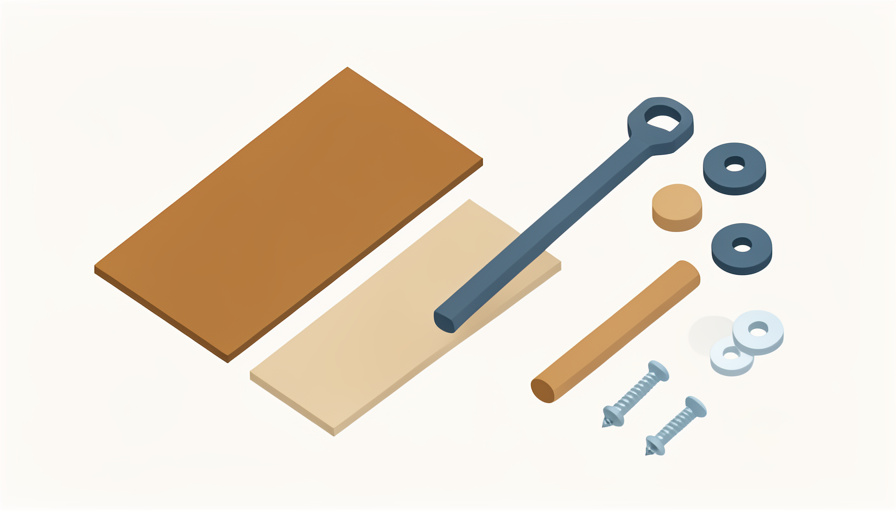

The box promised twenty minutes. Two hours in, a screw spins uselessly in its hole, one panel faces the wrong way, and the whole thing leans like it had a rough night. Flat-pack furniture is not hard, but it is unforgiving of small mistakes.
Most flat pack furniture assembly mistakes are not about strength or skill. They come from a rushed step, a hidden hardware trick, or a torque you cannot feel until the joint is already stripped. Get the order and the pressure right and a particleboard cabinet will stand square for years. Get them wrong and it wobbles, cracks, or worse, tips. Here are eleven mistakes that wreck stability, each with the fix that keeps your build solid.
Quick Take
- The two biggest killers are over-tightening, which strips the soft board, and half-turned cam locks, which leave the frame loose and racking.
- The thin back panel is not optional trim; it squares and braces the whole piece, so fit it while the frame is true.
- Anchoring a tall unit to the wall is the one mistake that turns a wobble into a genuine safety hazard.
Table of Contents
How We Chose These
We focused on the mistakes that actually cause a wobble, a stripped hole, or a crack, rather than generic tidy-up advice. Each one maps to a specific piece of hardware or a step people rush: cam locks, dowels, the back panel, torque, and wall anchoring. They run from the setup errors that start the trouble to the stability and safety failures that show up later, so you can catch a problem before it becomes permanent.
1. Skipping the Parts Count and the Instructions
Tipping the bag out and starting straight in is the first mistake. Flat packs use several near-identical screws and cams, and you often cannot swap one for another. Lay out and count every panel, dowel, cam, and screw against the parts list, and read the whole sequence once before you drive anything. Ten minutes here saves an hour of backtracking when you find a missing fastener three steps deep.
2. Building a Panel Backwards or Upside Down
Pre-drilled holes are not symmetrical, and the finished face is not always obvious. Fit a side panel the wrong way round and the shelf holes end up on the outside, or a visible edge shows the raw side. Dry-fit each panel first, match the hole pattern to the diagram, and confirm which face points out before a single cam goes in. Undoing a cammed joint later risks tearing the board.
3. Over-Tightening and Stripping the Hole
Particleboard threads are soft, and cam bolts have a snug point you can blow straight past. Keep driving and the bolt strips the hole or spins forever, and the joint never grips. Tighten by hand until it meets resistance and stops turning easily, then stop. If a hole is already stripped, a matchstick or a little wood glue and a toothpick can pack it enough to bite again.
4. Not Fully Seating the Cam Locks
A cam lock does nothing until it is turned the full half-rotation that pulls the bolt tight. Leave it part-way and the joint stays loose, so the whole unit racks and leans out of square when you move it. Turn each cam until it grips and the reference mark points toward the panel edge, then push the frame square and check every cam again before moving on.
5. Treating Dowels as the Strength
Wooden dowels line panels up and stop them sliding, but they do not hold the piece together on their own. Skip the cam or screw that belongs alongside them and the joint feels fine until the first load makes it sag. Use both: let the dowels align the panels, and let the cams or screws clamp them. Dry-fit dowels first, since a swollen one can stop a panel seating flush.
6. Reaching for an Impact Driver or High-Speed Drill
A powered driver is fast and merciless. On soft board it strips screw heads, over-drives cams, and blows out holes before you feel it happen. Use a hand screwdriver for the final turns, or set a drill to its lowest clutch setting and finish by hand. The few seconds you save with power are not worth a chewed cam seat you cannot undo.
7. Fitting the Back Panel Crooked, or Not at All
The thin hardboard back is what squares a cabinet and stops it twisting. Nail or clip it on while the frame is out of square and you lock the wobble in permanently; leave it off and the piece racks under its own weight. Set the frame on a flat floor, push it true, then fix the back at every point provided so it braces the whole unit.
8. Assembling on Carpet or an Uneven Floor
Soft carpet hides a lot. A frame that feels solid on a rug can rack and rock the moment it sits on a hard floor, because the pile let it flex as you built it. Assemble on a flat, hard surface where you can see and feel whether the piece sits true, and check for a rock before you load a single shelf.
9. Driving the Wrong Screw Into the Wrong Hole
Length matters. Put a long screw where a short one belongs and it punches through a visible surface or a drawer front, ruining the face in one turn. Match each screw to the one in the diagram, start it by hand to feel the thread catch, and stop the instant it seats. When a screw suddenly turns easy, back it out and check you have not broken through.
10. Forcing Parts That Will Not Line Up
When a panel refuses to seat, hammering it is the wrong instinct. A misaligned dowel or an offset cam hole is usually the cause, and force just cracks the board or snaps the dowel. Back the joint apart, find the peg or hole that is off, ease it into line, and let it slide home with light pressure. Flat-pack joints seat with a nudge, not a fight.
11. Skipping the Wall Anchor on Tall Units
This is the mistake that stops being about looks and starts being about safety. A dresser or bookcase can tip when a drawer is open or a child climbs, and the anti-tip strap in the bag is there for exactly that. Fix tall furniture to a wall stud with the bracket provided, every time. The U.S. Consumer Product Safety Commission’s Anchor It campaign has step-by-step guidance, and it takes only a few minutes.
The Takeaways
- Count parts and read the sequence first, and dry-fit panels so nothing goes in backwards.
- Hand-tighten to snug and no further; over-torque and power tools strip soft board fast.
- Seat every cam fully, use dowels and fasteners together, and fit the back panel while the frame is square.
- Build on a hard floor, never force a misaligned joint, and always anchor tall pieces to the wall.
Frequently Asked Questions
Why is my flat-pack furniture wobbly after assembly?
Usually the frame is not square, which comes from half-turned cam locks or a back panel fitted crooked or left off. Stand the piece on a hard floor, loosen the cams slightly, push the frame true, then retighten each cam fully and fix the back panel at every point. That back is what braces the unit and removes the wobble.
How do I fix a stripped cam lock hole?
If a cam bolt spins without gripping, the hole has stripped. Pack it with a wooden matchstick or a toothpick coated in a little wood glue, snap off the excess, let it set, then drive the bolt again so it bites into fresh material. For a badly damaged hole, a dowel and glue plug re-drilled to size gives a stronger repair.
Can I use a drill to assemble flat-pack furniture?
You can for the early, deep screws, but finish by hand or on the lowest clutch setting. Particleboard is soft, and a drill or impact driver easily strips screw heads and over-drives cams before you feel resistance. The last turn on any fastener should be slow and by feel, so you stop the moment it seats rather than a turn too late.
Do I really need to attach the back panel?
Yes. The thin hardboard back is structural, not decorative. It squares the frame and stops the whole piece twisting or racking under load. Fitting it while the cabinet sits true on a flat floor locks in that squareness, so never skip it or tack it on crooked, even if the furniture seems to stand fine without it.
How do I stop flat-pack furniture from tipping over?
Anchor it to the wall. Tall dressers, drawers, and bookcases can tip when weight shifts or a child climbs, so use the anti-tip strap or bracket included and screw it into a wall stud. It is a short job that prevents a serious injury, and safety bodies recommend anchoring any furniture with drawers, doors, or shelves.
Build It Once, Build It Square
A flat pack rewards patience more than muscle. Count the parts, dry-fit before you commit, keep the pressure gentle, and seat every cam fully so the frame stands true. Fit the back panel square, build on a hard floor, and anchor anything tall to the wall. Do those and a boxed cabinet becomes furniture that stays solid for years, not a wobble you keep re-tightening. For more home setup and repair guides, browse Wayodd’s Furniture section.


















































No Comments
Leave a comment Cancel