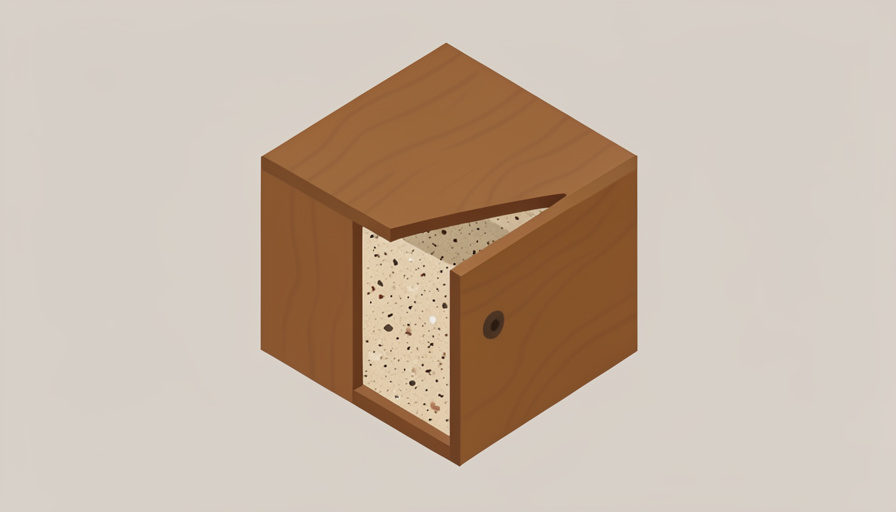

“Real wood” sounds reassuring until you learn that particleboard is technically real wood too. The words on a furniture listing hide more than they reveal.
Learning the solid wood listing phrases veneer sellers lean on is the fastest way to shop furniture online without getting fooled. Marketplaces are full of descriptions that sound like solid lumber but often mean a thin real-wood skin over a cheaper core, or no real wood at all. None of these materials are automatically bad, but they change what a piece is worth and how long it lasts. Here are eight phrases to translate on sight, plus quick ways to confirm what you are actually buying.
Quick Decoder
- “Real wood,” “engineered wood,” and “wood composite” can all mean MDF or particleboard.
- The word “construction,” as in “solid wood construction,” often hides a veneered or MDF panel.
- When a listing is vague, ask the seller directly and check the edges, weight, and grain.
Table of Contents
How We Chose These
We focused on the phrases that show up most in online furniture listings, that sound like solid wood while frequently meaning something cheaper, and that a shopper can decode in a few seconds. We also favored terms that change a piece’s price and lifespan, since that is what makes the distinction worth catching. They are ordered from the most common and misleading to the more niche.
Solid Wood, Veneer, or MDF: A Quick Reference
Before the phrases, it helps to know the three things they usually point to.
| Material | What it is | The usual tell |
|---|---|---|
| Solid wood | Boards cut from lumber all the way through | Grain that flows around edges and continues on the underside |
| Veneer | A thin real-wood layer glued over a cheaper core | Grain that repeats, or a seam where the skin wraps an edge |
| MDF or particleboard | Compressed wood fibers or chips with a printed or veneered surface | A smooth gray or brown core at a chip or drilled hole, and dead weight |
1. “Solid Wood Construction”
This is the classic. The frame may genuinely be solid wood while the tabletop, side panels, and shelves are MDF with a veneer. The giveaway is the word “construction,” which describes how the piece is built rather than promising the whole thing is lumber. Ask which specific parts are solid.
2. “Real Wood” or “Genuine Wood”
Technically true of almost anything from a tree, including particleboard and MDF, which are made from wood fibers. It tells you the material started as wood, not that it is a solid board. Treat it as marketing rather than a spec.
3. “Engineered Wood”
A manufactured board such as MDF, particleboard, or plywood, not solid lumber. Engineered wood can be perfectly sturdy, especially plywood, but it is a different product at a different price. If the listing says engineered, assume a core that is not solid.
4. “Wood Composite” or “Composite Wood”
Usually particleboard or MDF, meaning wood chips or fibers pressed together with resin. It is common in flat-pack furniture and budget pieces. The word “composite” is the flag that you are looking at a bonded board, not a plank.
5. “Manufactured Wood” or “Wood Product”
Another polite way of saying engineered board. “Wood product” in particular can cover almost any processed material, so it belongs in the same bucket as composite. When you see it, look for a separate line that names the actual core.
6. “Acacia Veneer,” “Walnut Veneer,” and Similar
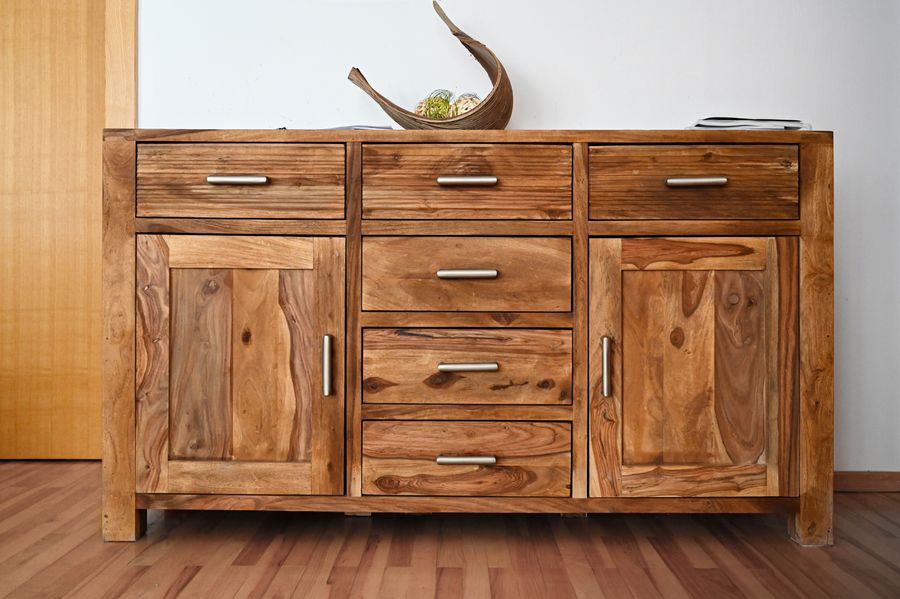
A named, attractive wood, but only as a thin surface over a cheaper core. The species tells you what the top layer looks like, not what holds the piece together. A veneer can be beautiful, yet it will not sand and refinish like solid wood.
7. “Wood Finish,” “Wood-Look,” or “Laminate”
Often no real wood on the surface at all, just a printed layer or laminate designed to look like grain. These are the most budget-friendly and the least durable when chipped. If the description leans on “finish” or “look,” expect a photo of wood rather than the material.
8. “Solid Wood and Engineered Wood”
A mix, and the honest listings say so, but the split matters. Frequently the legs or frame are solid while the large visible surfaces are engineered, which is where wear shows first. Ask the seller to map which parts are which before you decide the price is fair.
How to Confirm It Yourself
When a listing stays vague, a few checks settle it fast, whether in person or by asking the seller for photos. Woodworkers rely on the same simple tells.
- Knock on a panel; solid wood rings while MDF gives a dull, dead thud.
- Look for repeating grain, which almost always means a veneer.
- Check the edges and underside for a smooth gray or brown core, the signature of MDF or particleboard.
- Feel the weight; engineered boards often feel heavy in a lifeless way rather than solid.
- Open a drawer; dovetail joints suggest quality, while staples or clips suggest a budget build.
Frequently Asked Questions
Is veneer furniture bad?
Not necessarily. A quality veneer over a stable core can look excellent and cost less, and much fine antique furniture is veneered. The issue is paying a solid-wood price for a veneered piece, or expecting to sand and refinish a surface that is only a thin layer deep.
What does “solid wood construction” really mean?
It usually means some parts are solid wood while others, often panels and tops, are engineered board with a veneer. The phrase describes the build, not the whole material, so ask the seller which specific components are solid before assuming the entire piece is lumber.
Is engineered wood the same as MDF?
MDF is one type of engineered wood, alongside particleboard and plywood. Plywood is generally the sturdiest of the three, while particleboard is the least durable. “Engineered wood” alone does not tell you which, so look for the specific material named.
How can I tell veneer from solid wood in a photo?
Look for grain that repeats across a surface or a visible seam where the grain wraps an edge, both signs of veneer. On solid wood, the grain flows continuously around edges and appears on the underside. If you cannot tell, ask for a close-up of an edge and the back.
Does MDF furniture last?
It can for light use, but MDF and particleboard are more prone to sagging, chipping, and water damage than solid wood or plywood. They are fine for budget or short-term pieces, and less suited to heirlooms or heavy daily wear. Match the material to how hard the piece will work.
Shop the Spec, Not the Adjective
Furniture listings are written to sound reassuring, so the trick is to read past the adjectives to the actual core material. Translate the phrase, ask the seller what each part is made of, and run a quick knock-and-look test before you pay. For more on furnishing your space wisely, browse Wayodd’s Furniture section. Once you can decode the listing, the good pieces are easy to spot and the overpriced ones give themselves away.
































































No Comments
Leave a comment Cancel