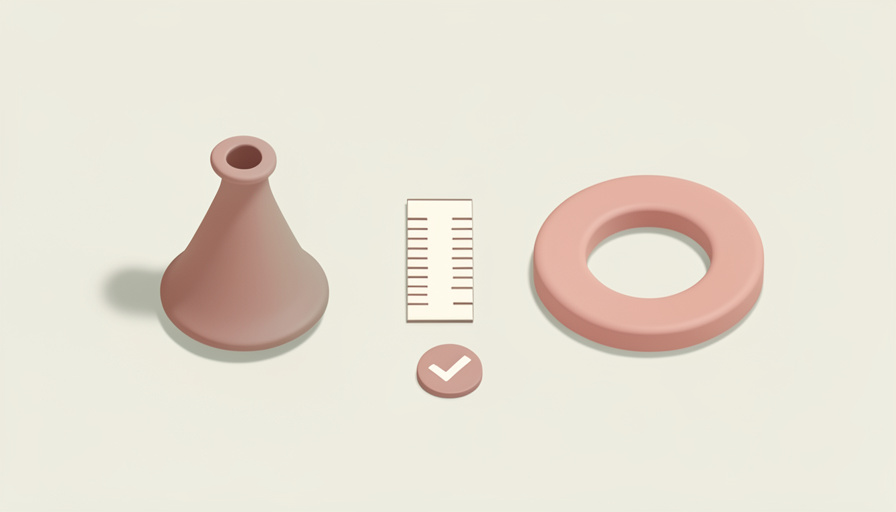

You used the same menstrual cup for years, and it never let you down. Then you had a baby, went back to it a few cycles later, and now it leaks, slides, or refuses to stay put no matter how carefully you insert it. It feels like you suddenly forgot how to use something you had mastered, but you did not. Your body changed, and the cup that fit the old you does not fit the new one.
The menstrual cup vs disc sizing question changes after childbirth, when a product that sealed perfectly for years suddenly leaks or slides. Cups and discs hold in place in completely different ways, so they are sized on different logic, and pregnancy affects each one differently. Understanding how the two fit, and how postpartum changes upend that fit, is the key to stopping the leaks. Here is how their sizing works and how to troubleshoot each.
Quick Take
- A cup seals with gentle suction against the vaginal walls, held by your muscles, so it is sized largely by whether you have given birth vaginally.
- A disc sits higher at the base of the cervix and is held by position behind the pubic bone, so its fit relies less on suction and sizing matters less.
- Because pregnancy weakens the muscles that hold a cup, many people leak postpartum and do better sizing up, going firmer, or switching to a disc.
This article is general information, not medical advice. Every body is different, and fit varies widely. If you have pain, persistent leaking, discomfort, or postpartum concerns, talk with your doctor, OB-GYN, or a pelvic floor physical therapist, who can advise on what is right for you.
Table of Contents
How Cups and Discs Hold Differently
The whole sizing difference comes from how each stays in place. A menstrual cup sits low in the vaginal canal, below the cervix, and forms a gentle suction seal against the vaginal walls, relying on your muscles to hold it there. A menstrual disc sits higher, at the base of the cervix, and tucks behind the pubic bone, so it is held by position rather than suction. That single distinction explains everything downstream: a cup’s fit depends on muscle tone and a proper seal, while a disc’s depends on being seated in the right spot. Cleveland Clinic’s overview of how menstrual cups work covers the basics.
How Cup Sizing Charts Work
Most cup sizing charts sort by a few factors, and childbirth is the biggest. Brands typically offer a smaller size for people who have not given birth vaginally and a larger size for those who have, because a vaginal delivery can leave more laxity and a slightly wider opening. On top of that, charts consider your cervix height, which affects how much cup fits and where it sits, your flow, which affects the capacity you need, and firmness, since a firmer cup pops open and holds a seal more reliably in some bodies. Age is often used as a rough proxy, but birth history and your own measurements matter more.
How Disc Sizing Works
Discs are sized on different, simpler logic. Because a disc is held by position rather than suction, its fit depends mainly on getting it seated at the base of the cervix and behind the pubic bone, which makes sizing less critical than with a cup. Many discs come in one size, while some brands offer two based on vaginal length or cervix height. Discs also tend to hold more than cups, which helps with heavy or postpartum flow. The trade-off is that positioning has a learning curve: seated correctly, a disc leaks little, but a disc placed too low or not tucked behind the bone will leak regardless of its size.
Why Postpartum Changes the Fit
Pregnancy and a vaginal birth change the very things a cup depends on. The muscles of the vaginal canal and pelvic floor, which hold a cup in place and help it seal, can stretch and weaken, so a cup that once stayed put may now slide down or fail to seal, and leak. Your cervix can also sit at a different height, changing how the cup fits and how much of its capacity the cervix takes up. This is why so many people find their trusted cup suddenly unreliable after a baby. It is not user error; the fit equation genuinely changed, and the fix is to re-evaluate size and type rather than blame your technique.
Troubleshooting Cup Leaks
When a cup leaks, work through the usual culprits. Confirm it fully opened and sealed, since a cup that did not pop open leaks even while looking clean inside; run a finger around the rim and rotate it to check. If it is sealed but still leaking, your cervix may be sitting low and taking up space inside the cup, so it fills faster than expected and needs emptying sooner, or a higher-capacity cup. A cup that slides down points to weakened pelvic floor tone or a size that is now too small to hold a seal, so sizing up or choosing a firmer cup often helps. And empty it more often on heavy days, because an overfull cup simply overflows.
Troubleshooting Disc Leaks
Disc leaks are almost always about placement. If a disc leaks, it is usually not tucked fully behind the pubic bone or not seated at the base of the cervix, so it sits too low and lets flow past. Push it back and up until the front rim slots behind the pubic bone, and check that the cervix is sitting inside the disc, not above or beside it. Some leaking is actually the disc releasing a little when you bear down, which is normal and different from a fit failure. Because sizing matters less for a disc, most disc leaks are solved by adjusting position rather than changing the product.
Cup or Disc After Childbirth?
Postpartum is exactly when many people switch, and the reason maps to how each holds. If your problem is that the cup will not stay put or seal because of weakened muscles, a disc can be easier, since it relies on position rather than suction and does not depend on the muscle tone pregnancy changed. If your problem is capacity, a disc’s larger volume or a bigger cup both help. If you love your cup, sizing up and trying a firmer model is worth attempting first, and pelvic floor exercises may improve tone over time. Many people keep both and choose by day and flow. The right answer is whichever holds without leaking for your changed body.
At a Glance: Cup vs Disc
| Factor | Menstrual cup | Menstrual disc |
|---|---|---|
| How it holds | Suction seal, held by muscles | Position, behind the pubic bone |
| Sizing basis | Vaginal birth, cervix height, flow, firmness | Mostly position; often one size |
| Capacity | Lower | Usually higher |
| Postpartum reliability | Can slip if muscles weakened | Often easier, no suction needed |
| Main leak cause | Poor seal or wrong size | Placement too low |
Fit is highly individual, so use this as a guide and confirm what works for your own body, or ask a clinician.
Frequently Asked Questions
Why did my menstrual cup start leaking after having a baby?
Because pregnancy and vaginal birth can stretch and weaken the muscles that hold a cup in place and help it seal, so the exact cup that fit before may now slide down or fail to form a seal. Your cervix may also sit differently, changing the fit and the usable capacity. This is common and not a matter of doing it wrong. The usual fixes are to size up, try a firmer cup that pops open more reliably, or switch to a disc, which does not depend on the muscle tone that childbirth changed.
Do I need a bigger menstrual cup after childbirth?
Often, yes. Most brands recommend their larger size for people who have given birth vaginally, because of the increased laxity and slightly wider opening that can follow. If your old cup now leaks or slides, sizing up is a reasonable first step, sometimes along with choosing a firmer cup for a more reliable seal. That said, fit is individual, and some people do better switching to a disc entirely. Check your chosen brand’s sizing chart with your birth history in mind, and be prepared to try a different size or type to find what seals.
Is a menstrual disc easier to use than a cup postpartum?
For many people, yes. A disc is held by position rather than the suction and muscle tone that pregnancy can weaken, so it often stays in place more easily after childbirth, and its typically larger capacity suits postpartum and heavy flows. The trade-off is a placement learning curve, since a disc must be tucked behind the pubic bone to work. If your main issue is a cup that will not stay put or seal anymore, trying a disc is a sensible next move, and many people find it solves the postpartum leaking a cup could not.
Why does my cup stay clean inside but I still leak?
That specific pattern usually means the cup did not fully open and seal, so blood runs down the outside while the inside stays empty. After inserting, run a finger around the rim to confirm it has popped open completely, and rotate the cup to help it seal against the vaginal walls. Another cause is a low cervix sitting just above or inside the cup, so flow bypasses the opening; a differently shaped or higher-capacity cup can help. A clean interior with leaking is a classic sign of a seal problem rather than an overflow problem.
Fit the Product to the New You
A menstrual cup and a disc leak for different reasons because they hold in place in different ways, and childbirth changes the exact things a cup relies on. If yours started leaking after a baby, that is a signal to re-evaluate rather than to give up: size up your cup, try a firmer one, or switch to a disc whose position-based fit does not depend on muscle tone. Troubleshoot a cup by checking its seal and capacity, and a disc by checking its placement. Give your changed body a fresh fit, and consult a clinician if leaking or discomfort persists. For more on period care and wellbeing, browse Wayodd’s Female Zone section.






























































No Comments
Leave a comment Cancel